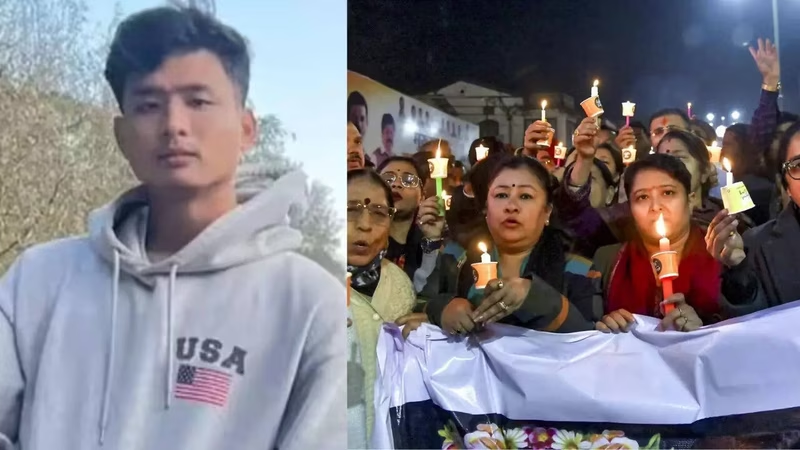
They called him ‘chinki’. They mocked him as ‘momo’. And then, they took his life.
On December 9, 2024, 24-year-old Anjel Chakma—a bright MBA student from Tripura—was walking in Dehradun when a casual encounter turned deadly. What began as verbal racial abuse escalated into a savage assault that ended with him being stabbed multiple times, including brutal blows to his head with a metal bracelet. He succumbed to his injuries, leaving behind a grieving family and a nation shaken by yet another hate crime against someone from India’s Northeast .
The Dehradun racial abuse case has ignited fury across social media, student communities, and political circles. It’s not just about one murder—it’s about a persistent, systemic pattern of dehumanization that Northeastern Indians face in mainland India. Now, as authorities hunt for the main absconding accused, the question isn’t just “Who did this?”—it’s “Why does this keep happening?”
Table of Contents
- What Happened: The Night Anjel Chakma Was Killed
- The Racist Slurs That Preceded the Attack
- Police Action and the Hunt for the Main Accused
- A Long History of Racism Against Northeast Indians
- National Outcry and Demands for Systemic Change
- What Needs to Change to Protect Northeast Students
- Conclusion: Anjel Chakma’s Death Must Not Be in Vain
- Sources
What Happened: The Night Anjel Chakma Was Killed
According to police reports and eyewitness accounts, Anjel Chakma was in Dehradun’s Paltan Bazaar area around 6:30 p.m. when he got into an argument with a group of men. The dispute reportedly began over a minor traffic issue—but quickly turned ugly when the group started hurling racial slurs at him .
Witnesses say the attackers mocked his appearance, calling him “chinki” (a derogatory term implying Chinese descent) and “momo” (a reference to the popular dumpling, used to belittle Northeastern features). The verbal abuse escalated into physical violence. One assailant struck Chakma on the head with a heavy metal bracelet, while another stabbed him multiple times in the chest and abdomen .
He was rushed to Doon Hospital but was declared dead on arrival. The brutality of the attack—and its clear racial motivation—sent shockwaves through Dehradun’s small but tight-knit Northeastern community.
The Racist Slurs That Preceded the Attack
Terms like “chinki” and “momo” are not harmless jokes—they are microaggressions with violent undercurrents. These slurs stem from a deep-seated ignorance that conflates all Northeastern Indians with East Asians, erasing their distinct tribal, cultural, and linguistic identities.
For decades, students, professionals, and tourists from states like Manipur, Nagaland, Mizoram, and Tripura have reported being:
- Stared at in public transport
- Denied housing on racial grounds
- Mocked for their food, dress, and accent
- Subjected to physical harassment and threats
A 2017 study by the North East Support Centre & Helpline found that over 70% of Northeastern students in Delhi experienced some form of racial discrimination . This isn’t isolated—it’s epidemic.
Police Action and the Hunt for the Main Accused
Uttarakhand Police have registered a case under Sections 302 (murder), 34 (common intention), and relevant provisions of the SC/ST (Prevention of Atrocities) Act, though activists argue it should also include charges under hate crime provisions .
While two suspects have been arrested, the alleged main perpetrator—identified as a local resident with a history of aggressive behavior—remains at large. Police claim they are “working round the clock” to track him down, with help from central agencies .
Meanwhile, student groups from the Northeast have held protests in Dehradun, Delhi, and Agartala, demanding immediate justice and enhanced protection for their communities.
A Long History of Racism Against Northeast Indians
This tragedy didn’t happen in a vacuum. Landmark incidents include:
- 2012 Delhi: A group of Northeastern students attacked in Gole Market on New Year’s Eve.
- 2014 Bangalore: A Manipuri woman assaulted and called “Chinese” by a mob.
- 2016 Hyderabad: A Naga student died after being beaten by locals who accused him of “looking like a terrorist.”
In response to mounting pressure, the Ministry of Home Affairs formed a committee in 2014, which recommended creating a dedicated helpline, sensitization programs for police, and fast-track courts for hate crimes—many of which remain unimplemented .
[INTERNAL_LINK:racism-against-northeast-indians-in-india] explores the historical roots and legal gaps that perpetuate this discrimination.
National Outcry and Demands for Systemic Change
Political leaders, celebrities, and civil society groups have condemned the murder. The Tripura government has announced financial aid to Chakma’s family and demanded a CBI probe. Student unions across India are calling for:
- Strict enforcement of the 2014 MHA guidelines on Northeastern safety.
- Mandatory anti-racism training for police, educators, and transport staff.
- Inclusion of Northeast history and culture in national school curricula to foster empathy.
- Creation of a national hate crime registry to track and deter racially motivated violence.
What Needs to Change to Protect Northeast Students
Real change requires more than arrests—it demands cultural and institutional reform:
- Safe zones: Universities and cities with large Northeast populations should establish dedicated support cells.
- Legal empowerment: Fast-track courts and legal aid for victims of racial abuse.
- Media responsibility: Avoid stereotyping Northeastern people as “foreign-looking” or “exotic.”
- Community policing: Engage Northeast leaders in local law enforcement dialogues.
As human rights advocate Josephine Ningthoujam notes, “Until we stop seeing Northeastern Indians as ‘others,’ these killings will continue” .
Conclusion: Anjel Chakma’s Death Must Not Be in Vain
The Dehradun racial abuse case is a grim reminder that India’s promise of unity in diversity remains unfulfilled for millions from the Northeast. Anjel Chakma wasn’t just a victim of a random act of violence—he was a casualty of decades of indifference.
His death must catalyze more than hashtags. It must drive policy, education, and a national reckoning with our own prejudices. Only then can students from Tripura, Manipur, or Mizoram walk the streets of Dehradun, Delhi, or Mumbai without fear.
Sources
- The Times of India: Dehradun racial abuse triggered fatal assault on Tripura student
- North East Support Centre & Helpline (NESH): Discrimination Against Northeast Indians – 2017 Report
- Uttarakhand Police – Official Statement on Anjel Chakma Case
- Ministry of Home Affairs: Committee on Northeast Safety – 2014 Recommendations
- Human Rights Law Network – Statements on Racial Violence in India