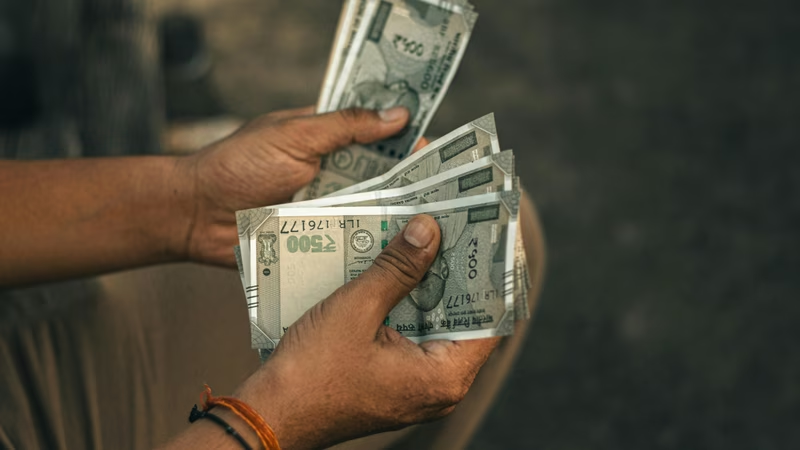
That crisp ₹500 note you just got as change? It might look clean, but it’s actually a rolling petri dish. According to microbiologist Dr. Shweta, everyday cash is crawling with microbial life—especially fungi—that most of us never stop to consider .
In a simple but eye-opening experiment, Dr. Shweta placed commonly circulated paper currency into a sterile culture medium. Within days, the results were undeniable: fuzzy colonies of mold and yeast began spreading across the agar—proof that your wallet is far from the sterile sanctuary you imagined .
This isn’t just a gross-out moment—it’s a public health wake-up call. In a world still wary of pathogens, understanding the hidden dangers of something as mundane as cash is more important than ever. Let’s pull back the curtain on the invisible world living in your pocket.
Table of Contents
- What the Microbiologist Found in Her Lab
- Why Money Is a Perfect Breeding Ground for Germs on Money
- Common Pathogens Hiding on Your Cash
- Who Is Most at Risk from Contaminated Currency?
- How to Protect Yourself from Bacteria and Fungi on Cash
- The Rise of Cashless Payments and Hygiene
- Conclusion: Wash Your Hands—Not Just Your Money
- Sources
What the Microbiologist Found in Her Lab
Dr. Shweta’s experiment was deceptively simple: she collected random paper notes from various vendors in urban and semi-urban India, swabbed them, and transferred the samples onto nutrient-rich agar plates. The cultures were then incubated at room temperature for 48–72 hours .
The results? Within two days, the plates bloomed with visible fungal growth—primarily species of Aspergillus, Penicillium, and Candida. These aren’t just harmless molds; some can trigger allergies, respiratory issues, or even infections in immunocompromised individuals .
“Money changes hands dozens of times a day,” Dr. Shweta explained. “Each touch deposits skin cells, sweat, food particles, and microbes. Combine that with India’s humid climate, and you’ve got the perfect storm for microbial growth.”
Why Money Is a Perfect Breeding Ground for Germs on Money
Paper currency isn’t just paper—it’s a complex matrix of cotton, linen, and embedded security threads. Its fibrous texture traps organic matter like a sponge. Add moisture from human contact and ambient humidity, and you’ve created an ideal environment for microbes to cling, multiply, and survive for days—or even weeks .
Studies from around the world back this up. A 2017 study published in Microbiome found over 3,000 different types of bacteria on New York City dollar bills . Another study in the Journal of Environmental Health detected E. coli, Staphylococcus aureus, and fecal coliforms on banknotes in multiple countries .
And it’s not just bacteria. Fungi—like the ones Dr. Shweta observed—are particularly resilient. They thrive in dark, moist places (like your back pocket or wallet) and can survive on dry surfaces far longer than many bacteria.
Common Pathogens Hiding on Your Cash
Not all microbes are dangerous, but some commonly found on money can pose real health risks:
- Staphylococcus aureus: Can cause skin infections, pneumonia, and even toxic shock syndrome.
- Escherichia coli (E. coli): Certain strains lead to severe food poisoning and urinary tract infections.
- Candida species: A type of yeast that can cause oral or genital thrush, especially in people with weakened immunity.
- Aspergillus: While usually harmless to healthy people, it can cause serious lung infections in those with asthma or compromised immune systems.
Even more concerning? Money has been shown to carry traces of viruses, including influenza and, in some studies, SARS-CoV-2—though surface transmission is now considered low-risk compared to airborne spread .
Who Is Most at Risk from Contaminated Currency?
While healthy adults may shrug off minor microbial exposure, certain groups should be extra cautious:
- Young children (who often touch their faces and put hands in their mouths)
- Elderly individuals with weakened immune systems
- People with chronic illnesses like diabetes or HIV/AIDS
- Healthcare workers or food handlers who move between high-risk environments
For these individuals, a simple habit—like eating after handling cash without washing hands—could be the difference between a healthy day and a trip to the clinic.
How to Protect Yourself from Bacteria and Fungi on Cash
You don’t need to swear off cash entirely—but you do need smarter hygiene habits. Here’s how to stay safe:
- Wash your hands immediately after handling cash, especially before eating or touching your face. Use soap and water for at least 20 seconds.
- Use hand sanitizer (with at least 60% alcohol) when soap isn’t available.
- Store cash in a dedicated wallet compartment—not loose in your pocket next to your phone or keys.
- Consider digital payments for high-frequency transactions like groceries or transit.
- Never let children play with money—it’s not a toy, it’s a vector.
[INTERNAL_LINK:hand-hygiene-best-practices] for more detailed guidance on effective handwashing techniques.
The Rise of Cashless Payments and Hygiene
While digital wallets and UPI apps weren’t invented for hygiene, they’ve become an unintended public health asset. A 2023 report by the Reserve Bank of India noted a 45% year-on-year increase in digital transactions , a trend accelerated by pandemic-era caution.
That said, your phone screen can also harbor germs—so don’t assume going cashless makes you germ-proof. Clean your phone regularly with a microfiber cloth and alcohol-based wipes .
Conclusion: Wash Your Hands—Not Just Your Money
Dr. Shweta’s experiment isn’t meant to scare you—it’s meant to empower you. Money will always be a shared object, and with sharing comes microbial exchange. But with simple, consistent hygiene practices, you can break the chain of transmission before it reaches you.
The next time you get change from a street vendor or withdraw cash from an ATM, remember: that note has been on a journey. And while you can’t control where it’s been, you absolutely control what you do next. So wash your hands. Your health is worth more than any denomination.
Sources
- The Times of India: Your wallet isn’t as clean as you think
- CDC: When and How to Wash Your Hands
- NIH: Fungal Contamination of Currency Notes
- Science of The Total Environment: Microbial Survival on Banknotes
- Microbiome Journal: Bacterial Communities on NYC Dollar Bills
- Journal of Environmental Health: Pathogens on Global Currency
- World Health Organization: COVID-19 Transmission
- Reserve Bank of India: Digital Payment Trends 2023
- U.S. FDA: How to Clean Your Phone Safely