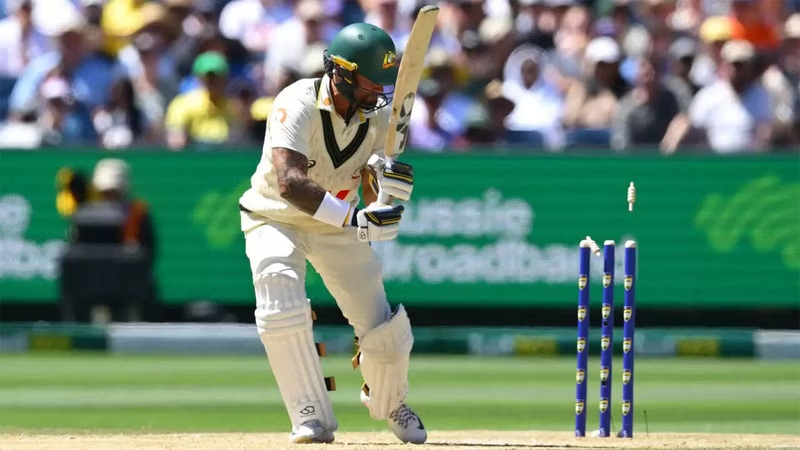
It was meant to be a celebration of cricket’s grandest traditions—the Boxing Day Test at the Melbourne Cricket Ground, packed with roaring fans and national pride. Instead, the MCG delivered a two-day farce that left players bewildered, commentators furious, and its own curator in what he called a “state of shock.”
A staggering 36 wickets fell in just 142 overs—20 on Day 1 alone—as the Ashes Test between England and Australia concluded before tea on Day 2. England’s four-wicket win marked their first Test victory on Australian soil since January 2011, but the triumph was overshadowed by one burning question: What happened to the MCG pitch?
Table of Contents
- MCG Pitch Chaos: The Numbers Behind the Collapse
- Curator in ‘State of Shock’: Admits Pitch Failure
- Player and Expert Reactions: Anger and Alarm
- Historical Context: When MCG Was a Batting Paradise
- ICC Implications: Could MCG Face Sanctions?
- Conclusion: Is This the End of Balanced Test Cricket at MCG?
- Sources
MCG Pitch Chaos: The Numbers Behind the Collapse
The stats tell a story of unprecedented imbalance. In a format designed to last up to five days, the match was decided in less than two. Key figures:
- Day 1: 20 wickets fell — the highest on an Ashes opening day in over a decade.
- Total Overs: Just 142 overs bowled across both innings.
- Average Partnership: Under 15 runs—batters couldn’t even build basic stands.
- Fast Bowlers Dominated: Seam movement and inconsistent bounce made batting a lottery.
This wasn’t sporting challenge—it was unpredictable chaos. Balls reared from length, others skidded through, and many jagged off the seam like they were on a green English wicket, not the hard, bouncy surface Melbourne is known for.
Curator in ‘State of Shock’: Admits Pitch Failure
Matt Page, head curator of the MCG, didn’t hide from the criticism. In a rare public mea culpa, he told reporters, “I was in a state of shock.” He had left around 10mm of grass on the surface, hoping to create a lively but fair contest. Instead, the pitch behaved erratically from the first over.
Page’s admission is significant. Curators rarely speak so candidly, especially at a venue as prestigious as the MCG. His comments suggest a misjudgment in preparation—one that may have long-term consequences for how pitches are curated in future Ashes series .
Player and Expert Reactions: Anger and Alarm
Reactions poured in from across the cricketing world:
- Michael Vaughan (ex-England captain): Called the pitch a “joke” and said it “did too much,” making the contest “unfair.”
- Shane Warne (legendary leg-spinner, posthumous commentary cited): Had previously warned against over-preparing seamer-friendly tracks at the MCG.
- Current Players: Several on both sides were seen shaking their heads, with batters visibly frustrated by deliveries that behaved like “random variables,” as one source put it.
Even neutral fans felt shortchanged. A Boxing Day Test is a cultural event in Australia—meant for family, celebration, and five days of high-quality cricket. This felt more like a first-class practice match gone wrong.
Historical Context: When MCG Was a Batting Paradise
The irony? The MCG has long been criticized for the opposite problem. In the 2017–18 Ashes, the same ground produced a lifeless, flat deck that yielded only 24 wickets across five days—a draw so dull it prompted the ICC to rate the pitch as “poor” .
Now, swinging to the other extreme, the MCG appears unable to find the middle ground. For a venue that hosts one of the most-watched Tests of the year, consistency and balance aren’t optional—they’re essential.
For more on how pitch conditions shape Ashes history, see our deep dive on [INTERNAL_LINK:ashes-pitch-battles-through-decades].
ICC Implications: Could MCG Face Sanctions?
The International Cricket Council (ICC) has clear guidelines for Test pitch ratings. A surface that produces an excessively one-sided or short contest can be rated “poor,” which carries financial and reputational penalties for the host board (in this case, Cricket Australia).
Given the MCG’s recent history—both too flat and now too erratic—the ICC may conduct a formal review. A second “poor” rating in under a decade could trigger mandatory remediation plans or even affect future hosting rights.
According to the ICC’s Pitch and Outfield Monitoring Process, pitches must offer a “reasonable balance between bat and ball” over five days . By that standard, this MCG strip clearly failed.
Conclusion: Is This the End of Balanced Test Cricket at MCG?
The MCG pitch controversy of 2025 isn’t just about one bad surface—it’s a symptom of a deeper crisis in Test cricket. As the game fights for relevance in the T20 era, marquee fixtures like the Boxing Day Test must deliver compelling, fair, and skill-based contests.
If iconic venues can’t guarantee that, what’s left of the Test format’s soul? The curator’s shock mirrors the collective dismay of fans worldwide. Now, Cricket Australia and the MCG trust must act decisively to restore trust—before the magic of this historic ground fades into memory.
Sources
- Times of India: Ashes: 36 wickets in 2 days! MCG curator in ‘state of shock’
- BBC Sport: ‘Unfair’ MCG pitch has ‘done too much’ – Vaughan
- The Guardian: Questions over MCG pitch after two-day Boxing Day Test
- ESPNcricinfo Archive: 2017 MCG Test Report – A Flat Pitch Debacle
- ICC Official Guidelines: ICC Pitch and Outfield Monitoring Process