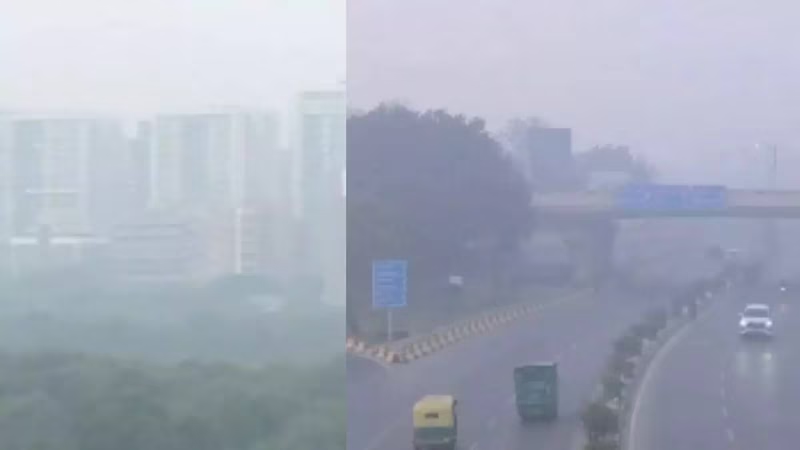
Delhi Air Pollution Hits Crisis Level Again—AQI Climbs to 391
On Sunday morning, residents of India’s capital woke up not to sunlight, but to a dense, acrid haze that blotted out the sun and swallowed landmarks whole. The iconic Akshardham Temple? Barely visible. The Yamuna riverbanks? Lost in a grey void. Delhi’s air quality index (AQI) had surged to **391**, pushing the city firmly back into the **’severe’** pollution category—triggering health warnings, school closures, and renewed calls for emergency action.
While Mumbai breathed easy with a moderate AQI of just 123 and light morning fog, Delhi’s 20 million residents were once again trapped in a toxic cloud laced with PM2.5, dust, and smoke. This stark contrast between India’s two megacities underscores a persistent environmental injustice—and the urgent need to address the **Delhi air pollution** crisis before it claims more lives.
Table of Contents
- What Does AQI 391 Really Mean?
- Delhi vs Mumbai: A Tale of Two Air Qualities
- Health Risks of ‘Severe’ Air Pollution
- Why Does Delhi’s Air Turn Toxic Every Winter?
- Government Measures—and Why They Fall Short
- What Residents Can Do Right Now
- Conclusion: Beyond Emergency Fixes to Long-Term Solutions
- Sources
What Does AQI 391 Really Mean?
The Air Quality Index (AQI) is a standardized scale that measures the concentration of major air pollutants. An AQI of 391 falls in the **’Severe’** category (401–500 is ‘Severe+’, but even 351–400 qualifies as severe under Indian standards). According to the Central Pollution Control Board (CPCB):
- AQI 0–50: Good
- AQI 51–100: Moderate
- AQI 201–300: Poor
- AQI 301–400: Very Poor
- AQI 401–500: Severe
But in practice, many monitoring stations across Delhi—including Anand Vihar and Wazirpur—reported readings **above 400**, placing them in the most dangerous bracket . At this level, even healthy individuals are advised to avoid all outdoor activity.
Delhi vs Mumbai: A Tale of Two Air Qualities
While Delhi choked, Mumbai recorded an AQI of **123**—classified as ‘moderate’—with only light fog reported in areas like Bandra. This dramatic difference isn’t accidental. It stems from geography, policy, and infrastructure:
- Geography: Delhi lies in a landlocked basin where cold winter air traps pollutants near the ground (a phenomenon called temperature inversion). Mumbai, by contrast, benefits from sea breezes that disperse pollutants.
- Vehicle Density: Delhi has over 12 million vehicles—the highest in India—many running on diesel and older fuels.
- Industrial & Construction Emissions: Unregulated construction dust and power plants around Delhi contribute up to 30% of PM2.5 levels .
The comparison highlights how urban planning and environmental governance can make or break a city’s breathability.
Health Risks of ‘Severe’ Air Pollution
Exposure to AQI levels above 350 isn’t just uncomfortable—it’s life-threatening. According to the World Health Organization (WHO), short-term exposure to severe pollution can lead to:
- Aggravated asthma and bronchitis
- Reduced lung function, especially in children
- Increased risk of heart attacks and strokes in elderly populations
- Eye irritation, headaches, and nausea
Hospitals in Delhi have already reported a **40% spike** in respiratory cases over the past week. Pediatricians warn that repeated exposure during childhood can cause permanent lung damage [INTERNAL_LINK:delhi-pollution-child-health-impact].
Why Does Delhi’s Air Turn Toxic Every Winter?
The **Delhi air pollution** crisis is seasonal but systemic. Key contributors include:
- Stubble Burning: Though reduced in 2025 due to state interventions, farmers in Punjab and Haryana still burn crop residue, sending smoke clouds toward Delhi.
- Vehicular Emissions: Contributes nearly 40% of PM2.5, especially from trucks and two-wheelers.
- Diwali Firecrackers: Despite bans, illegal fireworks during recent festivals spiked pollution levels.
- Construction Dust: With over 1,200 active sites, dust accounts for 25–30% of particulate matter.
Government Measures—and Why They Fall Short
The Delhi government has activated its Graded Response Action Plan (GRAP), which includes:
- Banning diesel trucks (except essentials)
- Stopping construction on non-essential sites
- Recommending work-from-home for 50% of government staff
- Deploying anti-smog guns and sprinklers
Yet critics argue these are **reactive, not preventive**. “We treat pollution like a fire drill—not a chronic disease,” says environmental lawyer Ritwick Dutta. “Without year-round enforcement on emissions and urban planning, we’ll be back here next November.”
What Residents Can Do Right Now
While systemic change is needed, individuals can take protective steps:
- Stay indoors during peak pollution hours (7–11 AM)
- Use **N95 masks** if you must go outside
- Run **air purifiers** with HEPA filters at home
- Check real-time AQI via apps like AirVisual or CPCB’s SAMEER
- Avoid morning walks or outdoor exercise until AQI improves
Conclusion: Beyond Emergency Fixes to Long-Term Solutions
The return of **Delhi air pollution** to ‘severe’ levels is not a natural disaster—it’s a man-made failure of policy, enforcement, and collective responsibility. While Mumbai’s moderate air shows that cleaner urban breathing is possible, Delhi remains trapped in a cycle of crisis and complacency. Until India invests in sustainable transport, clean energy, and inter-state coordination on farm fires, the capital’s smoggy Sundays will keep returning—thicker, longer, and deadlier each year.
Sources
- Times of India: Delhi air pollution: AQI hits 391, city back in ‘severe’ category
- Central Pollution Control Board (CPCB): Real-time AQI Data – December 2025
- World Health Organization: Air Pollution and Health
- IQAir World Air Quality Report 2024: Delhi Ranked Among Most Polluted Cities