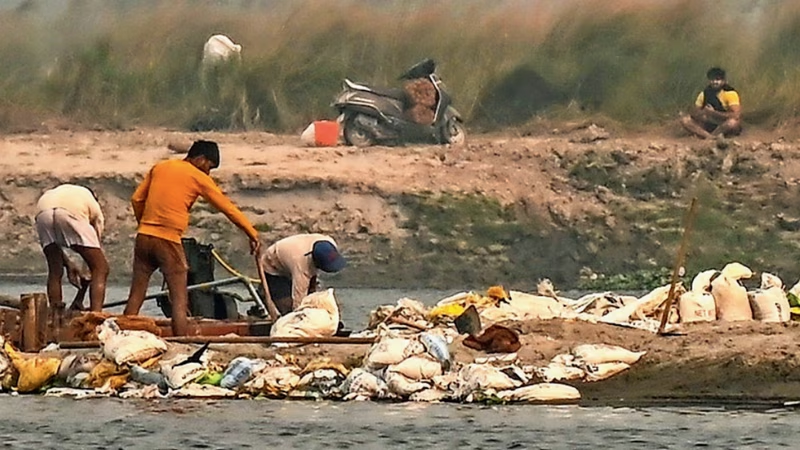
In a stark warning to both polluters and negligent authorities, a joint inspection committee appointed by the National Green Tribunal (NGT) has uncovered shocking levels of illegal activity in the Yamuna sand mining operations along Delhi-NCR’s floodplains. The report—based on on-ground surveys between November 2024 and January 2025—details a systematic breakdown of environmental safeguards, including mid-river excavation, unauthorized access ramps, and blatant overreach beyond legal lease boundaries.
Far from being isolated incidents, these violations paint a picture of organized, large-scale plunder of one of North India’s most ecologically sensitive zones. The Yamuna, already critically polluted and depleted, is now being physically hollowed out from within—threatening groundwater recharge, riverbank stability, and the very survival of communities downstream.
“This isn’t just illegal mining—it’s ecological sabotage,” said a senior member of the NGT-appointed panel. “When you dig in the middle of a flowing river, you’re not just stealing sand. You’re severing the lifeline of an entire basin.”
Table of Contents
- What the NGT Panel Found: Major Yamuna Sand Mining Violations
- Why Yamuna Sand Mining Is Strictly Regulated
- Administrative Failures Enabling Illegal Operations
- Environmental and Social Impact of Unchecked Mining
- What the NGT Panel Recommends
- How Sand Mafia Operations Work in the Yamuna Basin
- Conclusion: An Urgent Call to Save the Yamuna
- Sources
What the NGT Panel Found: Major Yamuna Sand Mining Violations
The joint committee—comprising officials from the Central Pollution Control Board (CPCB), Haryana Forest Department, and independent hydrologists—documented several critical breaches during its surprise inspections:
- Mid-River Excavation: Heavy earth-moving machinery (including JCBs and dump trucks) were found operating directly within the active river channel—strictly prohibited under the Yamuna Floodplain Zoning Notification, 2020.
- Illegal Access Ramps: Miners constructed unauthorized earthen and concrete ramps across the floodplain to ferry vehicles into the riverbed, destroying native vegetation and altering natural drainage.
- Lease Boundary Overreach: Multiple mining leases were found extending 500–800 meters beyond their sanctioned limits, often encroaching into no-mining buffer zones near protected wetlands.
- Nighttime Operations: Evidence of 24/7 mining activity, including loud machinery noise and unlit truck convoys, violating noise and operational hour norms.
Perhaps most alarming, the panel noted that several mining sites were active despite having expired or suspended licenses—a clear sign of regulatory capture or collusion.
Why Yamuna Sand Mining Is Strictly Regulated
Sand isn’t just dirt—it’s a vital ecological resource. In river systems like the Yamuna, sand beds act as natural filters, groundwater rechargers, and flood buffers. Unregulated extraction leads to:
- Lowering of the riverbed, causing riverbank erosion and land subsidence.
- Disruption of aquifer connectivity, reducing water availability for millions.
- Destruction of aquatic habitats, threatening fish and bird species.
Recognizing this, the Supreme Court and NGT have imposed strict guidelines, including zero mining in the active floodplain, mandatory environmental clearances, and annual extraction caps. Yet, as the latest report shows, enforcement remains weak.
Administrative Failures Enabling Illegal Operations
The NGT panel didn’t just blame miners—it squarely called out systemic lapses by state authorities:
- Inadequate Monitoring: No real-time surveillance (e.g., drones or GPS trackers) on mining vehicles.
- Corrupt Leasing: Short-term leases (3–6 months) issued without proper environmental impact assessments, often to dubious entities.
- Lack of Inter-State Coordination: Delhi, Haryana, and Uttar Pradesh operate in silos, allowing miners to shift operations across borders to evade crackdowns.
“The machinery of oversight has broken down,” the report states bluntly. “Without political will and institutional accountability, illegal Yamuna sand mining will continue unabated.”
Environmental and Social Impact of Unchecked Mining
Villages along the Yamuna—like Palla and Narela—report sinking farmland, drying wells, and increased dust pollution. Local farmers say their tube wells now yield muddy, saline water. Meanwhile, illegal truck routes have damaged rural roads and increased accident risks.
Ecologically, the river’s already fragile biodiversity is under greater threat. The Yamuna supports over 75 bird species and several endangered fish like the Golden Mahseer—both highly sensitive to sediment disruption. For more on river conservation, see [INTERNAL_LINK:india-river-restoration-projects].
What the NGT Panel Recommends
The committee has urged immediate action, including:
- Cancellation of all short-term mining leases in the Yamuna basin.
- Installation of CCTV and drone surveillance at all entry points to the floodplain.
- Formation of a tri-state Yamuna Mining Oversight Authority (Delhi-Haryana-UP).
- Criminal prosecution of officials found complicit in illegal operations.
The NGT is expected to issue formal directives based on this report in the coming weeks.
How Sand Mafia Operations Work in the Yamuna Basin
Illegal sand mining is a ₹10,000+ crore industry in North India. The “sand mafia” typically operates through shell companies that win small leases, then mine far beyond limits under cover of night. Trucks with fake permits transport sand to construction sites in Gurugram, Noida, and Delhi—often with police or revenue officials turning a blind eye for a cut.
According to IndiaSpend, over 300 FIRs related to illegal sand mining were filed in Haryana alone in 2024—but fewer than 10 led to convictions .
Conclusion: An Urgent Call to Save the Yamuna
The NGT panel’s findings on Yamuna sand mining are not just a regulatory report—they’re a distress signal from a dying river. If unchecked mining continues, the Yamuna risks becoming a seasonal drain rather than a living river. The time for excuses is over. What’s needed now is zero tolerance for violators, empowered oversight, and a collective commitment to protect India’s sacred waterways before it’s too late.
Sources
Times of India: NGT Panel Finds Major Yamuna Mining Violations
National Green Tribunal (NGT) – Official Website
IndiaSpend: Illegal Sand Mining in Haryana – Who’s Protecting the Mafia?
Central Pollution Control Board (CPCB): Yamuna Action Plan