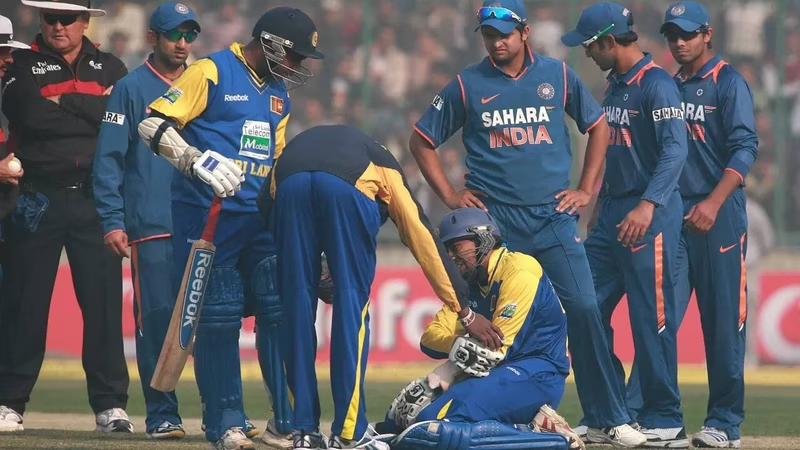
It was supposed to be a thrilling ODI between two fierce rivals. Instead, it became one of Indian cricket’s most infamous and bizarre chapters. On December 28, 2009, a match between India and Sri Lanka at Delhi’s Feroz Shah Kotla ground was abandoned after just 23.3 overs—not due to rain, crowd trouble, or a security threat, but because of a pitch so dangerous it was later ridiculed as a “hair transplant.”
This wasn’t just a minor hiccup in the cricket calendar. It was a national embarrassment that led to a formal inquiry, the suspension of a prestigious venue, and a harsh spotlight on India’s pitch preparation standards. The surface at the Feroz Shah Kotla pitch wasn’t merely unplayable—it was deemed a threat to player safety, turning what should have been a cricket contest into a farcical and alarming spectacle.
Table of Contents
- The Chaotic 23.3 Overs That Changed Everything
- Why Was It Called a ‘Hair Transplant’ Pitch?
- The Aftermath: Suspensions and Inquiries
- A History of Problematic Kotla Pitches
- How Cricket Governs Pitch Safety Today
The Chaotic 23.3 Overs That Changed Everything
The match, the fourth in a five-game series, began with high stakes. Sri Lanka had already taken an unassailable 3-1 lead, but pride was on the line. What followed was a whirlwind of chaos that seemed scripted for a comedy, not a professional sporting event.
The action was non-stop, but for all the wrong reasons:
- First-ball wicket: Zaheer Khan trapped Malinda Warnapura leg-before with the very first delivery.
- First-ball drop: The very next ball, debutant Sudeep Tyagi saw his edge dropped by Virender Sehwag at slip.
- Body blows and scary bounces: Batsmen were repeatedly struck on the body by deliveries that kept horrifically low or reared up unexpectedly from the same length.
- Luck, not skill: Thick edges flew past the keeper and third man for boundaries, while well-directed deliveries either disappeared into cracks or shot through at shin height.
By the time Sri Lanka was 49 for 3, the on-field umpires, Asad Rauf and Rod Tucker, had seen enough. After consulting with match referee Chris Broad, they suspended play. The pitch was declared unfit for play, and the match was officially abandoned—a rare and damning verdict in international cricket .
Why Was It Called a ‘Hair Transplant’ Pitch?
The term “hair transplant pitch” was coined by a furious and sarcastic Virender Sehwag in the post-match press conference. His analogy was brutal but spot-on: “It looked like a hair transplant. Some places had grass, some places didn’t” .
Photos of the pitch told the entire story. The surface was a patchwork of green grass, bare, dry earth, and deep, gaping cracks. This extreme inconsistency meant there was no predictability for the batsmen. A ball landing on a tuft of grass would behave completely differently from one hitting a bare, hard patch or a crack. This wasn’t a test of skill; it was a game of Russian roulette.
Curator P. Nagesh Rao, who had prepared the pitch, later claimed the issue was a new grass variety that hadn’t taken root properly. But for the players and fans, the excuse rang hollow. The primary job of a pitch curator is to deliver a safe and uniform surface, and on that day, the Feroz Shah Kotla pitch failed spectacularly.
The Aftermath: Suspensions and Inquiries
The fallout was swift and severe. The BCCI, facing immense public and media backlash, launched an immediate inquiry. The findings were damning.
The consequences included:
- Delhi was suspended from hosting international matches for a significant period.
- The match referee, Chris Broad, submitted a formal report to the ICC, which classified the pitch as “poor” under its pitch and outfield monitoring process.
- Curator P. Nagesh Rao was removed from his position.
- The incident became a textbook case study in pitch preparation gone wrong, cited in coaching manuals and administrative guidelines for years to come.
The abandoned match also stood as the final ODI of the career of veteran off-spinner Harbhajan Singh, who had taken a wicket in his brief spell—an anti-climactic and unfortunate end to a stellar career.
A History of Problematic Kotla Pitches
While the 2009 incident was the most egregious, the Feroz Shah Kotla (now Arun Jaitley Stadium) has had a long and complicated relationship with its pitches. Historically, it was known as a spin-friendly, slow track that often produced dull, low-scoring draws in Test cricket.
In an attempt to create more result-oriented and fast-paced games, the Delhi & District Cricket Association (DDCA) had been experimenting with pitch composition for years. The 2009 “hair transplant” was the disastrous culmination of that experimentation without adequate quality control or testing. It was a stark lesson that chasing pace and bounce without ensuring a solid, consistent base is a recipe for disaster.
How Cricket Governs Pitch Safety Today
In the wake of such incidents, the International Cricket Council (ICC) has significantly tightened its pitch monitoring protocols. Grounds are now rated, with serious sanctions—including demerit points and suspension from hosting international matches—for venues that produce dangerous or substandard surfaces .
Curators across the world now work with advanced agronomy techniques, soil analysis, and climate modeling to ensure pitches are not only challenging but also fair and safe. The ghost of the 2009 Feroz Shah Kotla pitch serves as a constant reminder of what happens when those standards are ignored.
For a deeper dive into how pitches are prepared for major tournaments, you can explore [INTERNAL_LINK:how-world-cup-pitches-are-prepared].
Summary
The abandoned India vs Sri Lanka ODI on December 28, 2009, remains a dark, albeit instructive, chapter in cricket history. The infamous “hair transplant” Feroz Shah Kotla pitch was a shocking failure of basic pitch preparation, creating a surface so dangerous and unpredictable that player safety was compromised. The chaotic 23.3 overs were filled with dropped catches, body blows, and unplayable deliveries, leading to the match’s unprecedented abandonment. The incident triggered a major overhaul in pitch curation standards in India and served as a global wake-up call on the paramount importance of a safe and fair playing surface. It’s a story not just of a failed cricket match, but of a critical lesson learned the hard way.
Sources
- Times of India: On this day: How a ‘hair transplant’ pitch abandoned IND vs SL ODI
- ESPNcricinfo Match Report: India vs Sri Lanka, 4th ODI, Delhi, 2009
- Interview with Virender Sehwag (2009): Various news archives on his “hair transplant” comment.
- ICC Pitch and Outfield Monitoring Process: Official ICC Regulations