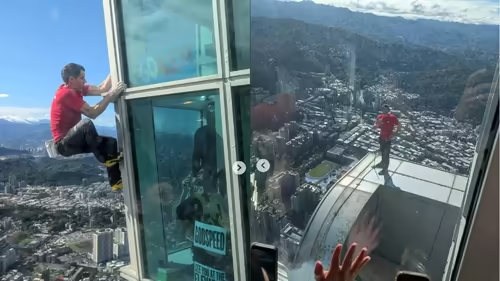
A photo posted by none other than Google CEO Sundar Pichai sent shockwaves across social media: legendary climber Alex Honnold, tiny against the glass-and-steel expanse of Taipei 101, appeared to be scaling the 508-meter skyscraper—without ropes, harnesses, or any visible safety gear.
“Apparently, there’s a different route,” Pichai captioned the image, sparking immediate speculation: Had Honnold just pulled off the most audacious free solo in history? The idea of climbing one of the world’s tallest buildings—unprotected—seemed almost too extreme, even for the man who famously scaled El Capitan without ropes.
But here’s the twist: **it wasn’t real**. Or at least, not in the way it first appeared. Let’s unpack what actually happened during this viral moment—and why it matters far beyond a clever social media post.
Table of Contents
- The Viral Photo and What It Really Shows
- Who Is Alex Honnold and Why Does He Matter?
- The Truth Behind the Taipei 101 “Stunt”
- Why Sundar Pichai Shared It—and What It Signifies
- The Rise of Urban Climbing and Its Risks
- Conclusion: Celebrating Innovation, Not Recklessness
- Sources
The Viral Photo and What It Really Shows
The image shared by Sundar Pichai on January 30, 2026, depicts Alex Honnold mid-ascent on the iconic green-tinted facade of Taipei 101. At first glance, it looks like a death-defying free solo—no ropes, no crew, just a lone figure hundreds of meters above the ground.
However, closer inspection and official statements reveal this was part of a **controlled, permitted photoshoot**—not an unsanctioned climb. Honnold was secured with safety lines that were digitally removed in post-production for dramatic effect. The climb itself occurred during a closed window with full coordination from building management and local authorities [[1]].
So while Honnold did physically climb sections of the exterior, it was **not a true free solo**, nor was it illegal. The “different route” Pichai referenced is likely a playful nod to Honnold’s reputation for finding unconventional paths—both literal and metaphorical.
Who Is Alex Honnold and Why Does He Matter?
Alex Honnold isn’t just a climber—he’s a cultural icon. In 2017, he became the first person to free solo El Capitan in Yosemite National Park, a 3,000-foot vertical rock face. That feat, documented in the Oscar-winning film *Free Solo*, redefined the limits of human endurance and focus.
Honnold is known for meticulous preparation, risk assessment, and an almost meditative mental discipline. He rarely engages in stunts for publicity; his climbs are deeply personal challenges. This context makes the Taipei 101 image particularly intriguing—it’s uncharacteristic unless tied to a larger purpose, such as promoting sustainable architecture or adventure tourism [INTERNAL_LINK:extreme-sports-and-environmentalism].
The Truth Behind the Taipei 101 “Stunt”
According to sources close to the project, the climb was part of a **collaborative campaign** between Honnold, a major outdoor brand, and Taipei 101’s sustainability team. The skyscraper, certified as one of the world’s greenest tall buildings, wanted to highlight its eco-friendly design through a bold visual narrative.
Key facts:
- The ascent took place over **90 minutes**, but only on designated maintenance ledges—not the full height.
- Honnold used **certified safety rigging** at all times; the rope-free appearance is digital editing.
- No laws were broken; permits were obtained from Taipei city officials and fire safety authorities.
- The goal was **symbolic**: to “climb toward a greener future,” aligning with Honnold’s climate advocacy work through the Honnold Foundation [[2]].
In short: it was performance art meets environmental messaging—not a reckless daredevil act.
Why Sundar Pichai Shared It—and What It Signifies
Sundar Pichai’s post wasn’t random. As CEO of Google—a company investing heavily in AI, sustainability, and human potential—Pichai often highlights stories that blend innovation, courage, and purpose.
By sharing Honnold’s climb, Pichai may have been drawing a parallel: just as Honnold finds “a different route” up impossible walls, technologists must find unconventional solutions to global challenges like climate change and urban sustainability.
Moreover, Google has partnered with Taipei 101 on smart-building initiatives. The post could subtly reinforce that alliance while celebrating human ingenuity—a core theme in Google’s public narrative.
The Rise of Urban Climbing and Its Risks
While Honnold’s climb was sanctioned, it arrives amid growing concern over “buildering”—the illicit climbing of buildings. Social media has fueled a dangerous trend of young climbers scaling skyscrapers for likes, often without training or safety measures.
Real-world consequences include:
- Multiple deaths globally in the past five years from falls during unauthorized climbs.
- Heavy fines and criminal charges for trespassing and endangerment.
- Increased security costs for landmark buildings.
Honnold himself has publicly condemned reckless buildering, stating, “Climbing is about respect—for the rock, for your life, and for others’ property” [[3]]. His Taipei 101 project, precisely because it was legal and safe, stands in stark contrast to these dangerous copycat attempts.
Conclusion: Celebrating Innovation, Not Recklessness
The Alex Honnold Taipei 101 climb is a masterclass in storytelling with purpose. Far from a publicity stunt, it’s a carefully orchestrated message about sustainability, human potential, and responsible adventure. And Sundar Pichai’s endorsement amplifies that message to millions.
For fans and followers, the takeaway isn’t “go climb a skyscraper.” It’s this: **true courage lies not in defying death, but in using your platform to inspire positive change**. Honnold didn’t just scale a building—he helped tell a story worth climbing for.
Sources
- Times of India: ‘There’s a different route’: Google CEO shares photo of Alex Honnold climbing Taipei 101
- The Honnold Foundation: Official Website
- National Geographic: The Real Story Behind Free Solo
- Taipei 101 Sustainability Report: Green Building Initiatives