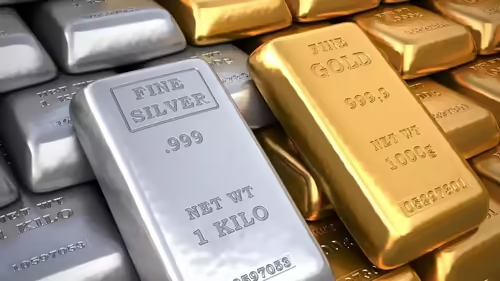
The precious metals market just got a brutal reality check. After a historic rally that sent gold and silver prices to unprecedented heights, a wave of intense selling has triggered what some are calling a ‘Metal Meltdown.’ On January 30, 2026, both metals plunged in their steepest daily decline in years, leaving investors stunned and scrambling for answers [[1]].
This wasn’t just a minor correction; it was a full-blown selloff fueled by a perfect storm of technical factors and shifting macroeconomic winds. The question on everyone’s mind is simple: after such a spectacular run, is this the end of the precious metals bull run, or just a healthy pause before the next leg up?
Table of Contents
- The Historic Plunge: Just How Bad Was It?
- Why Gold and Silver Prices Crashed
- The US Dollar Factor: A Surprising Twist
- What This Means for Investors
- Gold Price Forecast 2026: After the Crash
- Conclusion: Navigating the Volatility
- Sources
The Historic Plunge: Just How Bad Was It?
The numbers tell a dramatic story. On Thursday, January 29, gold had soared to an all-time high of $5,595 per ounce, a level that seemed almost unimaginable just months ago [[1]]. Silver was riding the same wave of safe-haven demand and speculative fervor.
Then came Friday, January 30. The market reversed course with shocking speed. Gold prices fell as much as 8% in a single day—their strongest selloff in 13 years [[1]]. In the Indian market, the impact was equally severe, with silver futures on the Multi Commodity Exchange (MCX) plummeting by a staggering 16.97% [[2]]. By the close, local silver had settled at Rs 3.45 lakh per kg, while gold was at Rs 1.66 lakh per 10 grams [[5]].
This kind of volatility is a stark reminder that even the most established safe-haven assets are not immune to sharp corrections, especially after a period of parabolic gains.
Why Gold and Silver Prices Crashed
The primary driver behind this sudden collapse was a massive wave of profit-taking. Traders and institutional investors who had ridden the metals’ incredible rally to record highs saw an opportunity to lock in their substantial gains. When a large number of market participants decide to sell at once, it creates a self-reinforcing cycle of falling prices and more selling.
As one market analyst noted, “The main reason for the selloff was the profit booking by traders after the recent rally” [[5]]. This is a classic technical market dynamic. After a strong, uninterrupted move, the market becomes overbought, and a pullback is a natural and necessary part of the cycle to reset sentiment and establish a new base of support.
The US Dollar Factor: A Surprising Twist
Adding fuel to the fire was an unexpected surge in the strength of the US dollar. Typically, a strong dollar is a headwind for gold and silver because these commodities are priced in dollars. When the dollar strengthens, it makes them more expensive for holders of other currencies, dampening demand.
This is particularly interesting because many analysts had predicted a weaker dollar for 2026 [[7]]. However, the greenback has shown surprising resilience in the early part of the year, with the dollar index climbing [[8]]. This unexpected strength provided a powerful counter-force to the safe-haven narrative that had been driving precious metals higher, giving sellers another compelling reason to exit their positions.
What This Means for Investors
For those holding physical gold or silver, or invested in related ETFs, this sharp drop can be nerve-wracking. However, it’s crucial to separate short-term noise from long-term trends. Here’s how to think about it:
- Long-Term Investors: If your investment thesis for owning gold and silver is based on long-term concerns like inflation hedging, portfolio diversification, or geopolitical risk, a short-term selloff shouldn’t change your strategy. These dips can even present buying opportunities.
- Short-Term Traders: This event is a textbook example of the risks of chasing momentum. It highlights the importance of having a clear exit strategy and not getting caught up in the euphoria of a rally.
- New Investors: For those looking to get into the market, this correction offers a chance to enter at a more reasonable price than the recent peaks, but caution is still warranted as volatility may persist.
Gold Price Forecast 2026: After the Crash
Despite the recent crash, the fundamental backdrop for gold remains supportive. The metal had already started 2026 on a strong footing, having surpassed the $4,600 mark earlier in the month on robust safe-haven demand [[3]]. The long-term drivers—persistent global uncertainty, central bank buying, and concerns about fiat currency debasement—haven’t disappeared.
Many experts believe this selloff is a necessary consolidation phase. The market needed to cool off after its historic run. While the path forward may be more volatile, the overall bullish trend for gold and silver prices in 2026 could very well remain intact, especially if the underlying economic and geopolitical tensions continue to simmer.
Conclusion: Navigating the Volatility
The ‘Metal Meltdown’ of January 30, 2026, serves as a powerful reminder of the inherent volatility in commodity markets. The sharp drop in gold and silver prices was a direct result of aggressive profit-taking following a record-breaking rally, compounded by a surprising show of strength from the US dollar. While the immediate future may be choppy, the long-term case for precious metals as a strategic asset class remains compelling for many investors. The key is to stay informed, manage risk, and avoid making emotional decisions based on a single day’s price action.
Sources
[INTERNAL_LINK:commodities-market-outlook-2026]
[INTERNAL_LINK:how-to-invest-in-gold-and-silver]
Finance Magnates: Why Gold Is Falling With Silver Today [[1]]
WhalesBook: Gold, Silver Plunge From Peaks on Profit-Taking Surge [[2]]
Times of India: Metal Meltdown [[5]]
CFI Trade: Gold and Silver Price Forecast January 2026 [[3]]