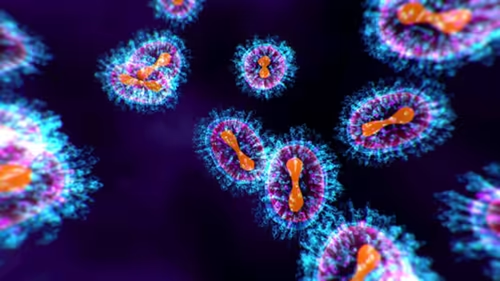
Imagine a virus so stealthy it slips into your body without fanfare—just a mild fever, maybe a headache. But within days, it’s racing toward your brain, triggering inflammation that can lead to coma or death. That’s the chilling reality of the Nipah virus, a rare but highly lethal pathogen that has re-emerged in India multiple times, most notably in West Bengal and Kerala [[1]].
With a fatality rate ranging from 40% to 75%—higher than Ebola in some outbreaks—Nipah isn’t just another virus to shrug off [[2]]. While it remains uncommon, its potential for rapid progression and devastating neurological consequences demands public awareness, early detection, and swift action.
Table of Contents
- What Is the Nipah Virus?
- How Does the Nipah Virus Enter the Body?
- The Nipah Virus Journey Inside Your Body
- Symptoms to Watch For: Early Warning Signs
- Is There a Treatment or Vaccine?
- Prevention and Public Health Response
- Sources
What Is the Nipah Virus?
The Nipah virus (NiV) is a zoonotic virus, meaning it jumps from animals to humans. It was first identified in 1999 during an outbreak among pig farmers in Malaysia—hence the name, derived from the village of Sungai Nipah [[3]]. In India, the natural reservoir is the Indian flying fox, a species of fruit bat widely found across South Asia.
These bats carry the virus without getting sick. But when their saliva or urine contaminates food—like raw date palm sap—or comes into contact with humans or intermediate hosts (such as pigs), transmission begins [[4]]. Human-to-human spread is also possible, especially in healthcare settings or among close contacts of infected individuals, making containment critical.
How Does the Nipah Virus Enter the Body?
Exposure typically occurs through one of three routes:
- Consumption of contaminated food: Drinking raw date palm sap that’s been tainted by bat excretions is a well-documented source in India [[5]].
- Direct contact with infected animals: Handling sick pigs or coming into contact with bat habitats.
- Close contact with infected people: Through respiratory droplets or bodily fluids, particularly during caregiving.
Once inside, the virus doesn’t waste time. It binds to receptors on the surface of human cells—specifically ephrin-B2 and ephrin-B3 proteins—which are abundant in blood vessels and neurons [[6]]. This gives it direct access to both the vascular and nervous systems.
The Nipah Virus Journey Inside Your Body
Here’s where things get dangerous. After initial replication in the respiratory tract or gut, the virus enters the bloodstream—a phase known as viremia. From there, it travels throughout the body, but its ultimate target is the central nervous system (CNS).
The virus crosses the blood-brain barrier, a tightly regulated gateway that normally protects the brain from pathogens. Once inside, it infects neurons and glial cells, triggering a massive inflammatory response. This leads to encephalitis—swelling of the brain—that can cause disorientation, seizures, and loss of consciousness within 24 to 48 hours [[7]].
In some cases, patients may appear to recover, only to suffer a relapse months or even years later with delayed-onset encephalitis—a phenomenon that makes Nipah uniquely insidious [[8]].
Symptoms to Watch For: Early Warning Signs
Early symptoms mimic common viral illnesses, which is why Nipah is often missed until it’s too late. Be alert for:
- Fever and headache (often the first signs)
- Muscle pain and fatigue
- Sore throat and dizziness
- Nausea and vomiting
- Altered mental state—confusion, drowsiness, or personality changes
- Seizures or coma in severe cases
If you’ve been in an area with a known Nipah outbreak and develop these symptoms, seek medical help immediately and inform health authorities. Early isolation is crucial to prevent further spread.
Is There a Treatment or Vaccine?
As of 2026, there is no approved antiviral drug or vaccine for the Nipah virus available to the general public [[9]]. Treatment remains supportive: managing fever, maintaining hydration, and providing intensive care for those with neurological complications.
However, promising candidates are in development. The monoclonal antibody m102.4 has shown efficacy in animal studies and has been used experimentally under compassionate use protocols [[10]]. Additionally, the WHO lists Nipah as a priority pathogen for R&D, accelerating global efforts to find a cure.
Prevention and Public Health Response
Prevention is your best defense. Public health experts recommend:
- Avoiding consumption of raw date palm sap, especially in endemic regions like Kerala and West Bengal.
- Washing fruits thoroughly and discarding any partially eaten by bats.
- Using protective gear when handling sick animals or caring for infected individuals.
- Reporting suspected cases immediately to local health authorities.
India’s National Centre for Disease Control (NCDC) has established rapid response teams and diagnostic labs in high-risk states. Their ability to contain past outbreaks—like the 2018 Kerala episode—demonstrates that with vigilance and coordination, even deadly viruses can be controlled [[11]].
Conclusion
The Nipah virus may be rare, but its impact is profound. Understanding how it invades the body, attacks the brain, and spreads silently is the first step toward protection. While science races to develop treatments and vaccines, public awareness and prompt reporting remain our most powerful tools. Stay informed, stay cautious, and never ignore the early signs—your brain could depend on it.
Sources
- World Health Organization (WHO): Nipah virus fact sheet
- Centers for Disease Control and Prevention (CDC): Nipah Virus (NiV) Overview
- Times of India: Nipah virus: What happens when the virus is inside the body
- Indian Council of Medical Research (ICMR): Nipah Virus Infection – ICMR Guidelines
- PubMed Central: Pathogenesis of Nipah Virus Encephalitis