Mi-17 Choppers’ Dhwaj Formation: The Jaw-Dropping Start to Republic Day 2026
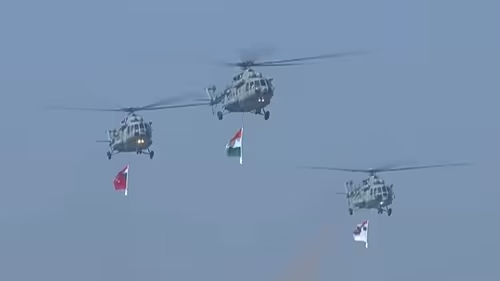
As the first rays of sunlight kissed the majestic Rajpath—now renamed Kartavya Path—the sky above New Delhi erupted in a symphony of patriotism and precision. The 77th Republic Day celebrations kicked off not with a drumbeat, but with the thunderous roar of rotors. Three Indian Air Force (IAF) Mi-17 V5 helicopters soared in perfect unison, executing the breathtaking Mi-17 Dhwaj Formation . This wasn’t just a flypast; it was a moving flag in the sky, a living tribute to the nation’s sovereignty and sacrifice.
The formation, named after the Hindi word for ‘flag’ (*Dhwaj*), saw the lead chopper carry the massive Tricolour, flanked by two others bearing the ensigns of the Indian Army and the Indian Navy. As they flew over the saluting dais, thousands of rose petals rained down on the parade ground, creating a visual spectacle that left the audience spellbound. It was a moment that perfectly encapsulated the day’s spirit: a blend of solemn remembrance, cultural pride, and raw military power .
Table of Contents
- The Symbolism Behind the Dhwaj Formation
- Republic Day 2026: A Parade of Progress and Power
- Meet the Mi-17 V5: Workhorse of the Indian Air Force
- From Kartavya Path to the Nation: A Message of Unity
The Symbolism Behind the Dhwaj Formation
The Mi-17 Dhwaj Formation is far more than a choreographed aerial stunt. It is a deeply symbolic act that represents the tri-service synergy of the Indian Armed Forces. The central helicopter, proudly displaying the national flag, signifies the unity of the nation. The flanking choppers, bearing the Army and Navy ensigns, highlight the integrated defense structure that safeguards India’s land, sea, and air borders .
This formation has become a staple of the Republic Day parade, but its emotional impact never diminishes. It serves as a poignant reminder of the sacrifices made by countless soldiers, sailors, and airmen. The shower of rose petals is a gesture of gratitude from the nation to its guardians—a silent ‘thank you’ raining from the heavens.
Republic Day 2026: A Parade of Progress and Power
Following the aerial spectacle, the ground parade commenced under the command of Lieutenant General Bhavnish Kumar, GOC-in-C of the Western Command . The parade was a masterful display of India’s journey since adopting its Constitution on January 26, 1950. It showcased the country’s advancements in defense technology, its rich cultural tapestry, and its unwavering commitment to peace and progress.
A particularly moving segment was the march-past by recipients of India’s highest gallantry awards, including the Param Vir Chakra and Ashoka Chakra. Their presence was a powerful testament to the courage and selflessness that form the bedrock of the nation’s security. The parade also featured tableaux from various states and ministries, each telling a unique story of India’s development, heritage, and vision for the future.
Meet the Mi-17 V5: Workhorse of the Indian Air Force
The star of the opening act, the Mi-17 V5, is a medium-lift, multi-role helicopter that has been the backbone of the IAF’s transport and utility fleet for decades. Manufactured by Russia’s Mil Moscow Helicopter Plant, this versatile aircraft is used for everything from troop transport and casualty evacuation to VIP movement and disaster relief operations .
Its ability to operate in diverse and extreme conditions—from the icy heights of Siachen to the humid swamps of the Sundarbans—makes it an indispensable asset. The fact that these rugged workhorses were chosen for the delicate and symbolic task of the Dhwaj Formation speaks volumes about their reliability and the skill of the IAF pilots who fly them. Their performance on Republic Day is a public demonstration of the quiet, everyday excellence that defines the Indian military.
From Kartavya Path to the Nation: A Message of Unity
The renaming of Rajpath to Kartavya Path in 2022 was more than just a change of name; it was a philosophical shift from ‘rule’ to ‘duty.’ The 2026 Republic Day parade, with its stunning Mi-17 Dhwaj Formation as the opening act, embodied this new ethos perfectly. It was a celebration not just of what India has achieved, but of the collective duty of its citizens and its armed forces to protect and nurture those achievements.
For millions watching at home and around the world, the image of the Tricolour flying in the sky, accompanied by a rain of petals, was a unifying moment. It transcended regional, linguistic, and political divides, reminding every Indian of their shared identity and responsibility. For more on India’s national celebrations, check out our coverage on [INTERNAL_LINK:indian-national-holidays].
Conclusion
The Mi-17 Dhwaj Formation is more than a tradition; it’s a national ritual that renews our collective spirit every year. In 2026, it set the tone for a Republic Day that was both a proud showcase of India’s might and a humble tribute to its heroes. As the petals settled on Kartavya Path, they left behind a message clear as the winter sky: unity, duty, and an unshakeable resolve to move forward together.