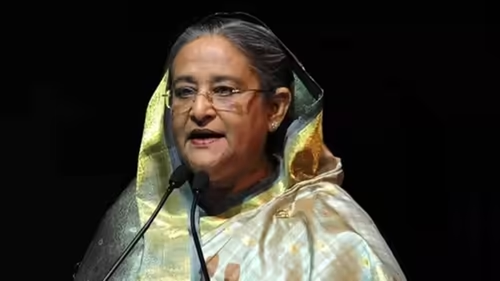
The already tense relationship between Bangladesh and India has hit a new low after Dhaka issued a scathing rebuke of New Delhi for permitting deposed Prime Minister Sheikh Hasina to speak at a public event in the Indian capital. The incident, which occurred on January 23, 2026, has sent shockwaves through diplomatic circles, with Bangladesh’s Foreign Ministry using unusually strong language to condemn the act, calling it a direct threat to the fragile state of bilateral relations.
Table of Contents
- Bangladesh’s Official Response: Shock and Fury
- What Did Hasina Say in Her Delhi Address?
- The Historical Context of the Hasina-India Relationship
- How This Event Impacts Bangladesh-India Relations
- What’s Next for Dhaka and Delhi?
- Conclusion
- Sources
Bangladesh’s Official Response: Shock and Fury
In an official statement from Dhaka, the Foreign Ministry declared it was both “surprised” and “shocked” that India had allowed the fugitive ex-premier to make such a public appearance . The government characterized the move as setting a “dangerous precedent” that could “seriously impair bilateral relations” . This is not just a routine diplomatic protest; it’s a clear signal of deep-seated anger from a government that feels its sovereignty has been disrespected.
Bangladesh has repeatedly requested India to extradite Hasina, who fled to the neighboring country in August 2024 following a student-led uprising that ended her long tenure . Dhaka’s frustration is compounded by what it sees as India’s failure to comply with these requests, a point they have now publicly reiterated .
What Did Hasina Say in Her Delhi Address?
While the full transcript of Hasina’s address in India is still under analysis, reports from the event suggest her speech was far from conciliatory. According to Bangladeshi officials, she used the platform to openly call for the removal of the current government in Dhaka and issued what they described as “blatant incitements” to her loyalists . From India’s perspective, this may have been seen as a simple exercise of free speech, but for Bangladesh, it was a direct interference in its internal affairs—a red line in international diplomacy.
The Historical Context of the Hasina-India Relationship
To understand the gravity of this situation, one must look back at the past decade. During her time in power, Sheikh Hasina was widely regarded as a close ally of India, with her government facilitating key strategic and economic partnerships. However, her sudden fall from grace and subsequent refuge in India has created a complex and awkward dynamic.
The current administration in Bangladesh, led by the BNP, views Hasina as a fugitive and holds her responsible for various alleged crimes. India, now hosting her, is caught in a difficult position: balancing its historical ties with a former leader against its need to maintain a functional and respectful relationship with the current government in Dhaka .
How This Event Impacts Bangladesh-India Relations
The fallout from Hasina’s address in India is expected to be significant. The two nations are already navigating a “readjustment phase” in their relationship, with ongoing disputes over trade, border security, and river water sharing . This public event has poured fuel on an already smoldering fire.
Adding to the tension, India has recently designated its diplomatic missions in Bangladesh as “non-family” postings, advising diplomats’ dependents to return home due to rising security concerns . This move, combined with the current controversy, paints a picture of a relationship that is increasingly transactional and fraught with mistrust.
With Bangladesh’s crucial parliamentary elections and a national referendum scheduled for February 12, 2026, the timing of this incident is particularly sensitive . Any perceived external meddling could be used as a potent political tool by domestic actors, further complicating the path to stable governance.
What’s Next for Dhaka and Delhi?
The immediate future of Bangladesh-India relations looks uncertain. Dhaka has made its displeasure abundantly clear, and it will likely expect a concrete response from New Delhi. Will India issue a formal apology? Will it restrict Hasina’s future public appearances? Or will it stand firm on its decision, risking a deeper rift?
Experts suggest that both nations have too much at stake—economically and strategically—to let the relationship collapse entirely . However, rebuilding trust will require more than just back-channel diplomacy; it will demand a clear and public demonstration of mutual respect.
Conclusion
The controversy surrounding Hasina’s address in India is far more than a simple diplomatic spat. It is a critical juncture that tests the resilience of a historically important regional partnership. For Bangladesh, it’s a matter of national sovereignty. For India, it’s a challenge of balancing principle with pragmatism. How both nations navigate this crisis in the coming weeks will set the tone for their relationship for years to come. Stay tuned to [INTERNAL_LINK:asia-news] for more in-depth coverage of this developing story.
Sources
- Times of India: Bangladesh raises concern over Hasina’s address in India
- Al Jazeera: Bangladesh slams India over fugitive ex-PM Hasina’s first public speech
- Carnegie Endowment for International Peace: India–Bangladesh Ties After Hasina
- Ministry of External Affairs, Bangladesh: Official Statement on the Public Address by Fugitive Sheikh Hasina in New Delhi