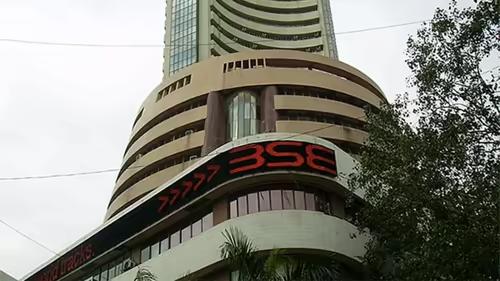
If you were planning to place a trade on Monday, January 26, 2026—stop right there. The Indian stock market is officially closed today in observance of Republic Day, one of the nation’s most significant national holidays. That means no buying, no selling, and no watching the Sensex or Nifty tickers move. This mandatory stock market holiday is part of a broader calendar that traders and investors must track religiously to avoid missed opportunities—or costly assumptions.
While it might seem like a minor pause in the grand scheme of your portfolio, understanding these closures is crucial for timing entries, exits, and even dividend declarations. So, let’s break down exactly what this Republic Day closure means for you—and what other market holidays lie ahead in 2026.
Table of Contents
- Is the Stock Market Open on January 26?
- What Exactly Is a Stock Market Holiday?
- Full List of 2026 Stock Market Holidays
- How Market Holidays Impact Your Trading Strategy
- What Smart Investors Do During a Trading Halt
- Conclusion: Plan Ahead, Trade Smarter
- Sources
Is the Stock Market Open on January 26?
No. Both the National Stock Exchange (NSE) and the Bombay Stock Exchange (BSE) are closed on January 26, 2026, in honor of India’s Republic Day. This is not a weekend—it’s a designated stock market holiday mandated by the Securities and Exchange Board of India (SEBI) and observed uniformly across equity, derivatives, and commodity segments .
Trading will resume as usual on Tuesday, January 27. All pending orders placed before the holiday will remain active unless canceled, but no new trades can be executed on the 26th.
What Exactly Is a Stock Market Holiday?
A stock market holiday is a day when major exchanges like the NSE and BSE suspend all trading activities. These holidays typically align with national events (like Independence Day or Republic Day), major religious festivals (Diwali, Eid, Christmas), or regional observances recognized by SEBI.
It’s important to note that while the primary markets are closed, some international brokers or platforms offering global exposure might still allow trading in foreign indices—but domestic Indian equities are completely off-limits.
Full List of 2026 Stock Market Holidays
The year 2026 includes a total of **16 official market holidays** as per the NSE calendar. These are carefully spaced throughout the year to accommodate both secular and religious diversity. Here are the key dates every investor should mark:
- January 26 – Republic Day
- February 14 – Maha Shivaratri
- March 8 – Holi
- April 2 – Good Friday
- April 14 – Dr. Babasaheb Ambedkar Jayanti
- May 1 – Maharashtra Day / Labour Day
- June 2 – Ramzan Eid (subject to moon sighting)
- August 15 – Independence Day
- September 4 – Ganesh Chaturthi
- October 2 – Mahatma Gandhi Jayanti
- October 21 – Dussehra
- November 1 – Diwali (Balipratipada)
- November 2 – Diwali (Govardhan Puja)
- November 3 – Diwali (Bhai Dooj)
- December 25 – Christmas
- One additional holiday (TBD based on state/local observances)
You can always verify the latest calendar on the official NSE India website, a high-authority source for all market-related announcements .
How Market Holidays Impact Your Trading Strategy
Ignoring market holidays can lead to real financial consequences. Consider these scenarios:
- Options Expiry Confusion: If an expiry falls on a holiday, it’s moved to the previous trading day. Missing this shift can leave you exposed.
- Liquidity Gaps: Trading volumes often dip before long weekends or holiday clusters (like Diwali), leading to wider bid-ask spreads.
- Global Event Risk: While Indian markets sleep, global events (Fed decisions, oil shocks) can create massive gaps when trading resumes.
For example, with the three-day Diwali shutdown in November 2026, any major geopolitical development during that window could trigger a volatile open on November 4. Savvy traders prepare for this by reducing leverage or hedging positions beforehand.
What Smart Investors Do During a Trading Halt
A stock market holiday isn’t just a day off—it’s a strategic pause. Here’s how seasoned investors use it:
- Review Portfolio Performance: Analyze YTD returns, sector allocation, and underperforming assets.
- Research Upcoming Earnings: January 27 might bring a flood of quarterly results—get ahead of the curve.
- Rebalance if Needed: Use the downtime to adjust asset allocation based on new economic data.
- Read Market Reports: Dive into RBI policy summaries or global macro outlooks from trusted sources like [INTERNAL_LINK:market-outlook-2026].
Remember: the market may be closed, but opportunity never sleeps.
Conclusion: Plan Ahead, Trade Smarter
The January 26 stock market holiday is more than just a ceremonial pause—it’s a reminder that successful investing requires attention to detail, including the calendar. With 16 holidays scheduled for 2026, staying informed isn’t optional; it’s essential.
Mark your calendars, set reminders, and use these quiet days to sharpen your strategy. Because when the market reopens on January 27, you’ll want to be ready—not reactive.
Sources
- Times of India: Stock market holiday: Are Sensex, Nifty open for trading on January 26?
- National Stock Exchange of India: Official NSE Website – Holiday Calendar
- Securities and Exchange Board of India (SEBI): SEBI Guidelines on Market Operations