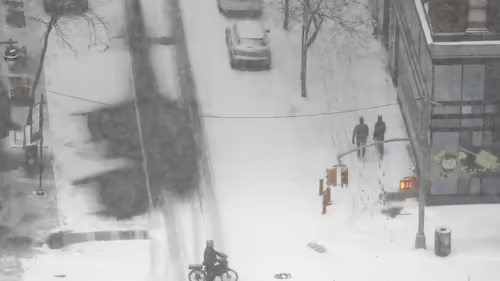
A deep freeze is gripping the United States, and it’s not just about uncomfortable cold. A powerful and disruptive US winter storm has swept across the nation, leaving a trail of chaos in its wake. Over 800,000 homes and businesses are currently in the dark, and an unprecedented 17 states have been forced to declare states of emergency to manage the crisis . This isn’t just a weather event; it’s a full-blown national emergency that’s testing infrastructure, emergency services, and the resilience of millions of Americans.
Table of Contents
- The Scale of the US Winter Storm Crisis
- Which States Declared a Winter Emergency?
- Power Outages and Infrastructure Strain
- Travel Nightmare: Air & Ground Disruptions
- Staying Safe During a Severe Winter Storm
- Conclusion: Weathering the Storm Together
- Sources
The Scale of the US Winter Storm Crisis
The current US winter storm is a classic example of a “bomb cyclone,” a system that undergoes rapid intensification, leading to extreme weather conditions . It has brought a dangerous mix of heavy snowfall, freezing rain, and bone-chilling Arctic air from the Midwest all the way to the East Coast. In some areas, snowfall totals have exceeded 18 inches, while ice accumulation has made roads impassable and brought down power lines with terrifying ease .
The human impact is immediate and severe. Beyond the loss of power, there are widespread reports of burst pipes, stranded motorists, and overwhelmed emergency services. The National Weather Service has issued multiple life-threatening wind chill advisories, warning that exposed skin can freeze in under 10 minutes in some regions .
Which States Declared a Winter Emergency?
In a coordinated effort to mobilize resources and ensure public safety, governors in 17 states have declared states of emergency. This legal step allows them to access federal aid, deploy the National Guard, and waive certain regulations to speed up response efforts. The affected states include a wide geographic band:
- Midwest: Ohio, Indiana, Illinois, Michigan, Wisconsin, Minnesota
- Northeast: New York, Pennsylvania, New Jersey, Connecticut, Massachusetts, Rhode Island, Maine, Vermont, New Hampshire
- South: Kentucky, West Virginia
This broad declaration highlights the sheer scale of the storm system and its ability to cripple diverse regions simultaneously .
US Winter Storm and Power Outages
The most visible impact of the storm has been the massive power outages. As of January 26, 2026, over 800,000 customers are without electricity, with the hardest-hit areas being in the Northeast and parts of the Midwest . The primary culprits are the weight of ice on power lines and trees snapping under the burden of heavy, wet snow.
Utility companies are working around the clock in hazardous conditions to restore power, but they warn that for many, the wait could be days. The combination of high demand for heating and damaged infrastructure has created a perfect storm for a prolonged outage. Local authorities are opening warming centers for those who cannot safely stay in their unheated homes, especially vulnerable populations like the elderly and young children [INTERNAL_LINK:winter-safety-tips].
What You Can Do If Your Power Goes Out
- Conserve Phone Battery: Use your phone sparingly and keep a portable charger ready.
- Prevent Pipes from Freezing: Let faucets drip slightly and open cabinet doors to allow warm air to circulate.
- Stay Warm Safely: Never use a stove or oven to heat your home, as this can lead to carbon monoxide poisoning. Use generators outdoors only.
- Check on Neighbors: Especially the elderly or those with medical needs.
Travel Nightmare: Air & Ground Disruptions
Travel is a complete mess. The storm has caused massive disruptions across all modes of transportation.
- Air Travel: Over 4,000 flights have been canceled across the US, with major hubs like Chicago O’Hare, New York JFK, and Boston Logan seeing the highest number of cancellations .
- Road Travel: State police and transportation departments are urging all non-essential travel to cease immediately. Numerous highways have been closed due to whiteout conditions and jackknifed tractor-trailers.
- Rail Services: Amtrak has suspended or significantly delayed service on many of its Northeast Corridor routes.
If you have travel plans in the next 48 hours, it is strongly advised to check with your carrier and consider postponing your trip.
Staying Safe During a Severe Winter Storm
Your safety is the top priority. The Centers for Disease Control and Prevention (CDC) offers clear guidance on how to prepare for and survive extreme winter weather . Their key recommendations include having an emergency kit with water, non-perishable food, medications, and a first-aid kit. They also stress the importance of knowing the signs of hypothermia and frostbite.
For real-time updates on road conditions, power restoration, and emergency shelter locations, rely on official sources like your local government’s website or the National Weather Service (weather.gov).
Conclusion: Weathering the Storm Together
The current US winter storm is a stark reminder of nature’s power and the critical importance of community and preparedness. While the immediate focus is on restoring power and ensuring everyone’s safety, the long-term conversation will inevitably turn to the resilience of our aging infrastructure in the face of increasingly extreme weather events. For now, the message is clear: stay indoors, stay warm, and stay informed. Millions of Americans are in this together, and by looking out for one another, they will get through this deep freeze.
Sources
- Times of India: Winter storm sweeps US: Over 800k lose power; 17 states declare emergencies
- Associated Press: Winter storm knocks out power for hundreds of thousands across 17 states
- National Weather Service: Official Forecasts and Warnings
- CDC: Winter Weather and Power Outages: Staying Safe
- FlightAware: Live Flight Cancellations and Delays