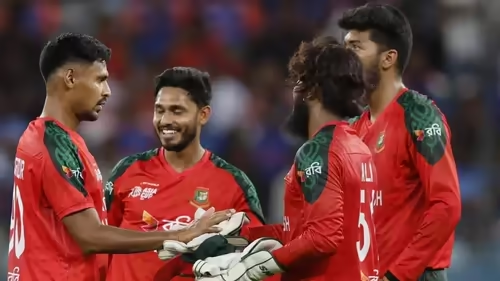
The cricketing world is reeling from a decision that feels less like a logistical hiccup and more like a seismic fracture in the sport’s foundation. The Bangladesh T20 World Cup exit from the 2026 tournament isn’t just about one team missing out; it’s a stark warning sign about the fragile state of international cooperation, player welfare, and the very spirit of the game.
The World Cricketers’ Association (WCA) didn’t mince words, calling the situation a “sad moment for our sport” and urging all stakeholders to engage in “deep reflection” . This isn’t mere disappointment—it’s a formal indictment of a system that appears to be failing its most important constituents: the players and the fans.
Table of Contents
- Why Did Bangladesh Withdraw?
- The ICC Response and Scotland’s Entry
- The World Cricketers’ Association (WCA) Statement
- Broader Implications for Global Cricket
- What Happens Next at the T20 World Cup 2026?
- Conclusion: A Sad Moment Requiring Urgent Action
- Sources
Why Did Bangladesh Withdraw?
The Bangladesh Cricket Board (BCB) made the difficult call to pull its national team from the upcoming ICC Men’s T20 World Cup 2026, which is set to be co-hosted by India and Sri Lanka from February 7 to March 8, 2026 . Their primary reason? Unresolved security concerns.
Facing what they deemed an unacceptable risk, the BCB formally requested that the ICC move all of Bangladesh’s scheduled matches from India to the co-host nation, Sri Lanka. This was not a casual ask but a firm stance based on their assessment of the prevailing geopolitical climate . However, the ICC Board, in a decisive 14-2 vote, rejected this proposal, with only Pakistan supporting Bangladesh’s position .
With their request denied and their security demands unmet, the BCB felt it had no choice but to officially withdraw from the tournament, a move they have since accepted as final .
The ICC Response and Scotland’s Entry
The International Cricket Council (ICC) acted swiftly to maintain the integrity of the tournament schedule. Following the BCB’s official withdrawal, the ICC confirmed that Scotland would be the replacement team for Group C . This decision ensures the competitive structure remains intact, with Scotland now set to face cricketing giants like England and the West Indies .
While the ICC’s move is a pragmatic solution for the immediate future of the event, it does little to address the underlying tensions that led to this unprecedented situation. The governing body now faces intense scrutiny over its handling of security assurances and its communication with its member boards.
Bangladesh T20 World Cup exit: The WCA’s Stark Warning
It’s the reaction from the players’ union that carries the most weight. The World Cricketers’ Association (WCA), the global voice for professional cricketers, issued a powerful statement that goes far beyond the specifics of this single event.
WCA CEO Tom Moffat described Bangladesh’s absence as “concerning and damaging” to the sport . The association’s core argument is multi-faceted:
- Lack of Player Consultation: Players, whose safety and careers are on the line, were not adequately consulted in the high-stakes decisions leading up to the withdrawal.
- Breach of Trust: The WCA pointed to a “broader trend of agreements not being honoured,” suggesting a systemic erosion of trust between the ICC, its member boards, and the athletes themselves .
- A Threat to Unity: The entire episode is seen as a direct threat to the global unity that cricket desperately needs to thrive, especially in a crowded international sports market.
This isn’t just about Bangladesh; it’s a canary in the coal mine for the entire international cricket ecosystem. The WCA’s call for “deep reflection” is a direct challenge to the ICC to rebuild its relationship with the players it governs.
Broader Implications for Global Cricket
The fallout from the Bangladesh T20 World Cup exit could have long-lasting consequences:
- Geopolitical Tensions in Sport: This incident starkly illustrates how real-world political and security issues can directly impact the sporting calendar, forcing boards into impossible choices between competition and safety.
- Player Power and Welfare: The WCA’s strong stance signals a growing movement where player welfare is non-negotiable. Future tours and tournaments may hinge on transparent safety protocols and genuine player input.
- ICC’s Authority and Credibility: The ICC’s ability to manage crises and mediate between its members is now under a global microscope. Its handling of this situation will set a precedent for years to come.
For fans, this is a heartbreaking loss. The passion of the Bangladeshi supporters and the talent of their players are a vital part of the World Cup’s magic. Their absence is a void that Scotland, despite their own merits, cannot truly fill in the hearts of many fans.
What Happens Next at the T20 World Cup 2026?
The tournament itself will go on. From February 7th, the world’s best T20 teams will battle it out across iconic venues in India and Sri Lanka . Scotland, a team with a proud history of punching above its weight, now has a golden opportunity to make a statement on the biggest stage .
However, the shadow of Bangladesh’s absence will loom large. Every match in Group C will be a reminder of the team that should have been there. The focus will inevitably shift to how other nations, particularly those with similar security concerns, will navigate their own participation.
For more on the evolving landscape of international cricket, see our analysis on [INTERNAL_LINK:future-of-international-cricket].
Conclusion: A Sad Moment Requiring Urgent Action
The WCA was right to call this a “sad moment.” It’s sad for the fans who won’t see their heroes compete. It’s sad for the players who have trained their entire lives for this stage. But most of all, it’s sad because it reveals deep, structural problems within the administration of our beloved sport.
The Bangladesh T20 World Cup exit is not an isolated incident; it’s a symptom. The path forward requires more than just replacing a team in a bracket. It demands a fundamental commitment from the ICC to transparency, to player safety, and to honoring the spirit of global cooperation that makes events like the World Cup so special. Without that, this “sad moment” could become a recurring nightmare for cricket.
Sources
- Times of India: T20 World Cup: Bangladesh’s exit from tournament ‘a sad moment for our sport’
- ICC Official Website: ICC confirms Scotland as Bangladesh replacement for T20 World Cup 2026
- World Cricketers’ Association: Official Statements on Bangladesh’s Withdrawal
- ESPNcricinfo: Bangladesh accepts ICC’s T20 World Cup axe, won’t appeal