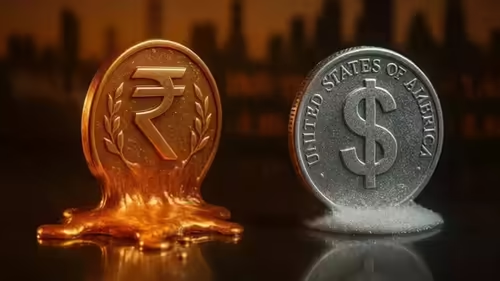
Rupee Hits Record Low of ₹92 Against Dollar: What It Means for You
In a historic and unsettling development, the Indian rupee has officially breached the ₹92 mark against the US dollar—a level never seen before in the nation’s financial history . This sharp depreciation isn’t just a number on a screen; it directly impacts your daily life, from the price of petrol at the pump to the cost of your child’s overseas education. Yet, not all is doom and gloom. For India’s export sector, a weaker rupee can be a powerful tailwind.
Table of Contents
- Why Did the Rupee Hit 92 Against the Dollar?
- How a Weak Rupee Hurts Indian Consumers
- The Silver Lining: Why Exporters Are Cheering
- Balancing Act: Inflation vs. Economic Growth
- What Should You Do Now? Practical Tips for Individuals
Why Did the Rupee Hit 92 Against the Dollar?
The rupee hits 92 against dollar milestone amid a perfect storm of global and domestic pressures. Key factors include:
- Stronger US Dollar: The Federal Reserve’s hawkish stance has kept US interest rates high, making dollar-denominated assets more attractive to global investors.
- Widening Current Account Deficit (CAD): India’s import bill—especially for crude oil and gold—has surged, while export growth has slowed due to weak global demand .
- Foreign Portfolio Outflows: Global investors have pulled billions from emerging markets, including India, seeking safer returns in the US and Europe.
- Geopolitical Tensions: Ongoing conflicts in Eastern Europe and the Middle East have spiked oil prices, further straining India’s trade balance.
While the Reserve Bank of India (RBI) has intervened by selling dollars from its forex reserves to stabilize the currency, the underlying macroeconomic imbalances remain a challenge.
How a Weak Rupee Hurts Indian Consumers
When the rupee hits 92 against dollar, everyday Indians feel the pinch in multiple ways:
Fuel Prices Soar
India imports over 85% of its crude oil. A weaker rupee means each barrel costs more in rupee terms, leading to higher petrol and diesel prices—even if global oil prices stay flat. This cascades into increased transportation and logistics costs, raising prices across the board.
Electronics and Imported Goods Get Pricier
From smartphones and laptops to cars and home appliances, most high-end electronics are imported or rely on imported components. Expect steeper price tags at retail stores and e-commerce platforms like Amazon and Flipkart.
Overseas Education and Travel Become Costly
Students planning to study in the US, UK, or Canada will now need significantly more rupees to pay tuition fees. Similarly, international vacations, medical tourism, and even remittances to family abroad become more expensive.
The Silver Lining: Why Exporters Are Cheering
Not everyone loses when the rupee weakens. Indian exporters—from IT firms and textile manufacturers to pharmaceutical and engineering companies—see a direct boost to their earnings.
Here’s why: When they sell goods or services overseas, they receive payment in stronger currencies like the US dollar. When converted back to rupees at ₹92/$, their revenue jumps dramatically compared to when the rate was ₹82 or ₹85.
For example, an IT company earning $1 million would have received ₹82 crore at ₹82/$. Now, at ₹92/$, that same amount translates to ₹92 crore—a 12% windfall without any increase in sales volume.
This dynamic can improve corporate profitability, strengthen balance sheets, and potentially lead to higher dividends or reinvestment in expansion.
Balancing Act: Inflation vs. Economic Growth
Economists warn that while a weak rupee supports exports, it also fuels imported inflation. The RBI now faces a delicate balancing act: raise interest rates to support the currency (which could slow growth) or hold rates steady to encourage investment (risking higher inflation).
“A sustained rupee depreciation beyond ₹90 could push headline CPI inflation above 6%, breaching the RBI’s tolerance band,” notes a recent report by CRISIL [[INTERNAL_LINK:india-inflation-outlook-2026]].
Experts, including those cited by the Times of India, advise a “balanced policy approach” that combines fiscal discipline, strategic forex management, and supply-side reforms to contain inflation while protecting growth momentum .
What Should You Do Now? Practical Tips for Individuals
If you’re worried about the falling rupee, here are actionable steps:
- Delay big-ticket imports: Postpone buying foreign electronics or luxury items if possible.
- Lock in forex rates: If planning international travel or education, consider using forward contracts or multi-currency cards to hedge against further depreciation.
- Invest in export-oriented stocks: Sectors like IT, pharma, and textiles may benefit—consult a SEBI-registered advisor before investing.
- Reduce discretionary fuel use: Carpool, use public transport, or switch to EVs to offset rising fuel costs.
Summary
The rupee hits 92 against dollar is a watershed moment for India’s economy. While it increases costs for consumers and businesses reliant on imports, it offers a competitive edge to exporters. The real challenge lies in managing the dual risks of inflation and growth slowdown. For individuals, awareness and proactive financial planning are key to navigating this volatile phase.