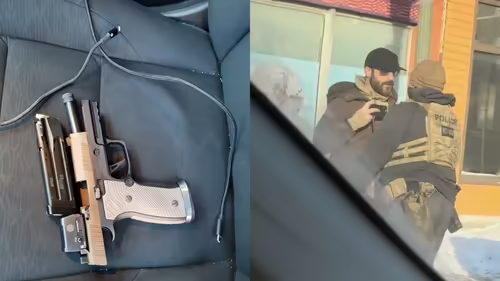
It was just before dawn on January 20, 2026, in a quiet residential neighborhood of Minneapolis when a loud crash shattered the silence. Moments later, gunfire erupted. By sunrise, 37-year-old Mohamed Ali—a Somali-American father of three and longtime resident—was dead, shot by federal immigration agents during what authorities described as a “targeted enforcement operation.”
This marks the **second fatal Minneapolis shooting** involving U.S. Immigration and Customs Enforcement (ICE) agents in under six months, triggering immediate citywide protests, calls for accountability, and renewed scrutiny of how immigration enforcement is conducted in American communities. Residents are asking: Why are armed federal agents conducting raids in family homes? And why does it keep ending in death?
Table of Contents
- What Happened in the Minneapolis Shooting?
- Who Was Mohamed Ali?
- The Second Fatal Encounter: Why This Feels Familiar
- Community Reaction and Citywide Protests
- ICE Protocols Under Scrutiny
- Legal and Policy Implications
- Conclusion: A Call for Transparency and Reform
- Sources
What Happened in the Minneapolis Shooting?
According to ICE’s initial statement, agents from its Enforcement and Removal Operations (ERO) unit arrived at Ali’s home in the Cedar-Riverside area with an administrative warrant for deportation. They claim they announced themselves before entering, but that Ali “confronted them with a weapon,” prompting agents to open fire .
However, neighbors and family members dispute this account. No body camera footage has been released—because ICE agents are not required to wear them. Witnesses say they heard no warning before the door was breached, and Ali’s family insists he was unarmed, holding only his phone when shot multiple times in the chest .
The Hennepin County Medical Examiner confirmed Ali died from gunshot wounds. The Department of Homeland Security’s Office of Inspector General has launched an investigation, but community leaders argue that internal reviews have failed to deliver justice in past cases.
Who Was Mohamed Ali?
Mohamed Ali wasn’t a fugitive or a criminal. He was a delivery driver, a mosque volunteer, and a father who had lived in Minnesota for over 15 years. His immigration case stemmed from a minor traffic violation in 2023 that led to a denied asylum appeal—a common bureaucratic outcome that doesn’t reflect a threat to public safety .
Friends describe him as gentle and deeply involved in his community. “He helped new immigrants find housing and jobs,” said Amina Hassan, a neighbor. “To say he was dangerous is a lie.”
The Second Fatal Encounter: Why This Feels Familiar
This tragedy echoes a nearly identical incident in July 2025, when ICE agents fatally shot 29-year-old Abdirahman Yusuf during a similar predawn raid in North Minneapolis. That case also ended without charges, citing “officer safety” as justification .
The recurrence has fueled accusations that ICE is operating with impunity in Minnesota. Critics point to a pattern: raids conducted without local law enforcement coordination, in neighborhoods with large immigrant populations, using aggressive entry tactics more suited to counterterrorism than civil immigration enforcement.
Community Reaction and Citywide Protests
Within hours of the shooting, hundreds gathered outside the Minneapolis Police Department’s 5th Precinct, chanting “No raids, no fear, immigrants are welcome here!” Demonstrators blocked major intersections, and local advocacy groups like the Minnesota Immigrant Rights Action Committee (MIRAC) demanded an independent investigation and an immediate moratorium on ICE home raids .
Minneapolis Mayor Jacob Frey condemned the lack of transparency but stopped short of calling for ICE to be barred from the city—a stance that drew criticism from progressive council members. “We cannot allow federal agents to turn our neighborhoods into war zones,” said Councilmember Jamal Osman.
ICE Protocols Under Scrutiny
This **Minneapolis shooting** has reignited national debate over ICE’s operational guidelines:
- No body cameras: Unlike most local police departments, ICE agents are not mandated to record enforcement actions, creating a “he said, they said” scenario in fatal incidents.
- Use of force policies: ICE’s use-of-force policy permits lethal action if an agent “reasonably believes” there’s an imminent threat—but the threshold is vague and rarely challenged.
- Lack of local oversight: Cities like Minneapolis have limited authority to regulate or restrict federal immigration operations, even when they violate local sanctuary policies.
Human rights organizations, including the American Civil Liberties Union (ACLU), argue these gaps enable systemic abuse. “When you combine unchecked power with racial bias, tragedies like this become inevitable,” said ACLU legal director Teresa Nelson .
Legal and Policy Implications
Beyond public outrage, this case could influence federal policy. Lawmakers like Rep. Ilhan Omar (D-MN) have reintroduced the “Protecting Sensitive Locations Act,” which would ban ICE raids at homes, schools, and places of worship without a judicial warrant. Currently, ICE operates under administrative warrants signed by its own officials—no judge required .
Moreover, the incident adds pressure on the Biden administration, which promised a more humane immigration system but has faced criticism for maintaining high deportation rates and aggressive enforcement tactics in certain regions.
Conclusion: A Call for Transparency and Reform
The **Minneapolis shooting** of Mohamed Ali is more than a single tragedy—it’s a symptom of a broken enforcement paradigm. When federal agents operate without body cameras, without local coordination, and without judicial oversight, trust evaporates and lives are lost. The people of Minneapolis aren’t just mourning a father; they’re demanding a system where immigration status doesn’t equate to a death sentence. Until then, the protests will continue. For deeper analysis on federal enforcement trends, see our coverage on [INTERNAL_LINK:us-immigration-enforcement-reforms].
Sources
- Times of India: Minneapolis shooting: Federal agents kill 37-year-old man – 10 things to know
- American Civil Liberties Union (ACLU): ICE and Border Patrol Abuses
- U.S. Department of Homeland Security – Office of Inspector General: Official Investigations Portal
- Minnesota Immigrant Rights Action Committee (MIRAC): Community Advocacy Updates