When Words Fail, Love Speaks Loudest
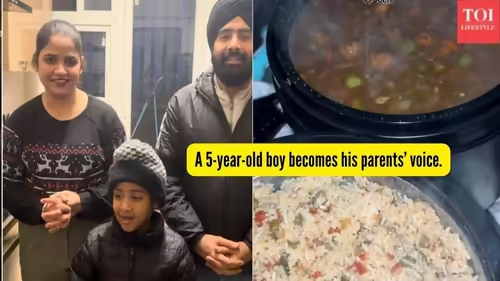
In a quiet neighborhood in Mohali, Punjab, a remarkable story of resilience, love, and entrepreneurship is unfolding—not through grand speeches or polished marketing campaigns, but through the innocent, determined voice of a five-year-old boy. Meet Sukhmehar Singh, the unexpected spokesperson for his parents’ homegrown food venture, Quietly Delicious.
His parents, Vanspreet Singh and Anmol Kaur, are both deaf and mute. For years, they faced daily challenges in a world built for verbal communication. But when they decided to turn their passion for cooking into a small tiffin service, they never imagined their young son would become their bridge to the outside world—and eventually, to national fame.
This isn’t just a feel-good story. It’s a powerful testament to how innovation, family bonds, and digital connectivity can transform limitations into opportunities. And at the heart of it all is a brand that’s as heartfelt as its name: Quietly Delicious.
Table of Contents
- The Birth of Quietly Delicious
- Sukhmehar’s Role as the Family ‘Voice’
- How a Viral Video Changed Everything
- The Business Model Behind the Emotion
- What This Means for Inclusive Entrepreneurship
- Conclusion: More Than Just a Tiffin Service
- Sources
The Birth of Quietly Delicious
Vanspreet and Anmol didn’t set out to start a business empire. Like many families during uncertain economic times, they simply wanted to make ends meet while doing what they loved: cooking wholesome, homestyle Punjabi meals. Their kitchen became their workshop, and their recipes—passed down through generations—became their silent language.
They launched Quietly Delicious as a modest tiffin service, delivering fresh, affordable meals to locals in Mohali. But without the ability to speak on calls, negotiate with customers, or explain their menu over the phone, growth seemed impossible. Orders were limited to neighbors who knew them personally. That’s when their son, Sukhmehar, stepped in—unprompted, untrained, but full of love.
Sukhmehar’s Role as the Family ‘Voice’
At just five years old, Sukhmehar learned to interpret his parents’ signs, expressions, and intentions with astonishing accuracy. He began answering customer calls, explaining the day’s menu, taking orders, and even handling delivery logistics. To outsiders, it sounded like a precocious child playing pretend. But for this family, it was survival—and dignity.
“He doesn’t see it as work,” Anmol shared through a sign language interpreter in a recent interview. “He sees it as helping Mom and Dad. He’s proud of our food.”
This natural, unscripted role made their interactions authentic and deeply moving. Customers weren’t just buying meals—they were supporting a family’s dream, voiced by a child who believed in it completely.
How a Viral Video Changed Everything
Everything changed when a local content creator filmed a short clip of Sukhmehar calmly explaining to a customer that “Mummy made dal makhani today—it’s extra creamy!” while his parents smiled proudly in the background. The video, posted on Instagram and YouTube Shorts, quickly went viral, amassing millions of views within days.
National media picked up the story. The Times of India featured them in a heartwarming piece , and soon, orders poured in not just from Mohali, but from across Chandigarh, Delhi, and even requests for nationwide shipping. The hashtag #QuietlyDelicious began trending, symbolizing more than a food brand—it became a movement celebrating silent strength.
The Business Model Behind the Emotion
While the emotional narrative captured hearts, Quietly Delicious also stands on solid culinary ground:
- Menu Focus: Authentic Punjabi home-cooked meals—dal tadka, paneer butter masala, sarson da saag, and more.
- Pricing: Affordable tiffin plans starting at ₹150/day, making it accessible to middle-income families.
- Delivery: Initially hyperlocal, now expanding via partnerships with Swiggy and Dunzo in select zones.
- Branding: Minimalist, heartfelt packaging with a small note: “Made with love. Spoken by Sukhmehar.”
Their success proves that emotional storytelling, when paired with quality product and execution, can create a powerful brand identity—even without traditional advertising.
What This Means for Inclusive Entrepreneurship
The story of Quietly Delicious offers crucial insights for policymakers, social entrepreneurs, and inclusive business advocates. According to the World Health Organization, over 430 million people globally have disabling hearing loss . Yet, support systems for deaf entrepreneurs in India remain limited.
This family’s journey highlights how technology (smartphones, social media) and familial support can fill institutional gaps. It also underscores the need for more accessible business tools—like AI-powered sign-to-text apps or voice-assistants trained for non-verbal users.
For more on disability-inclusive startups in India, explore resources from the National Institute for the Empowerment of Persons with Multiple Disabilities, a government body championing inclusive development.
You can also read our feature on [INTERNAL_LINK:inclusive-startups-india] to discover other inspiring ventures breaking barriers.
Conclusion: More Than Just a Tiffin Service
Quietly Delicious is far more than a tiffin business. It’s a symbol of resilience, a lesson in empathy, and proof that communication transcends speech. Through Sukhmehar’s unwavering support, his parents have not only built a livelihood but also inspired millions to rethink ability, family, and the power of quiet determination.
As their story continues to spread, one thing is clear: sometimes, the most powerful voices come from the smallest speakers.
Sources
- Times of India: His parents can’t speak, so their 5-year-old son became their ‘voice’
- World Health Organization (WHO): Deafness and Hearing Loss Fact Sheet
- National Institute for the Empowerment of Persons with Multiple Disabilities (NIEPMD): Official Website