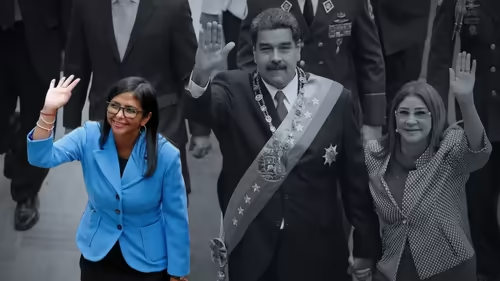
In the shadowy corridors of global diplomacy, few stories are as electrifying—or as dangerous—as the alleged secret backchannel between Venezuela’s powerful Vice President Delcy Rodriguez and top U.S. officials. According to recent intelligence leaks and diplomatic sources, Rodriguez may have brokered a covert understanding with Washington to orchestrate the peaceful exit of President Nicolás Maduro—a move that could finally bring an end to over a decade of economic collapse, repression, and isolation .
While neither Caracas nor Washington has officially confirmed these talks, the mere possibility has sent shockwaves through Latin American capitals and sparked intense speculation among analysts. Could the woman once dubbed “Maduro’s iron fist” now be the architect of his undoing?
Table of Contents
- Who Is Delcy Rodriguez? The Enforcer Turned Kingmaker
- The Secret Deal: Allegations and Evidence
- Why Would Rodriguez Betray Maduro?
- U.S. Strategy: Sanctions and Regime Change
- What This Means for Venezuela’s Future
- Conclusion: A Regime on the Brink?
- Sources
Who Is Delcy Rodriguez? The Enforcer Turned Kingmaker
Long seen as Maduro’s most loyal lieutenant, Delcy Rodriguez has been a central figure in Venezuela’s authoritarian machinery since the Hugo Chávez era. As Foreign Minister and later Vice President, she spearheaded propaganda efforts, defended the regime at the UN, and was instrumental in circumventing U.S. sanctions through complex financial networks—earning her a place on the U.S. Treasury’s sanctions list in 2018 .
Her reputation for unwavering loyalty made her rise to second-in-command seem inevitable. Yet insiders now suggest that even the most devoted allies grow weary when the ship is sinking. With Venezuela’s economy in freefall, hyperinflation rampant, and public unrest simmering, Rodriguez may have concluded that survival—not loyalty—is the ultimate political instinct.
The Secret Deal: Allegations and Evidence
According to multiple regional intelligence reports cited by international media, discreet meetings between Rodriguez’s intermediaries and U.S. State Department officials have taken place in third countries—including Panama and the Dominican Republic—since late 2025 . The core proposal? A negotiated transition plan that would see Maduro step down in exchange for immunity from prosecution and guarantees for key regime figures.
In return, Rodriguez would lead an interim government tasked with organizing free and fair elections under international supervision—a model previously attempted (with mixed success) in other fragile states.
While concrete proof remains classified, several indicators lend credibility to the rumors:
- Softening U.S. rhetoric: Senior Biden administration officials have recently shifted from demanding “Maduro’s removal” to calling for a “peaceful democratic transition”—a subtle but significant change in tone.
- Sanctions relief signals: Limited oil sanctions waivers granted to Chevron in 2025 were reportedly contingent on progress in political talks involving “credible regime insiders.”
- Rodriguez’s uncharacteristic silence: Unlike her usual combative public appearances, Rodriguez has avoided criticizing the U.S. in recent months, fueling speculation of behind-the-scenes coordination.
Why Would Rodriguez Betray Maduro?
Betrayal in politics is rarely personal—it’s strategic. For Rodriguez, the calculus may be clear:
- Self-preservation: With the International Criminal Court investigating crimes against humanity in Venezuela, securing a legal exit may be her only path to avoiding prison.
- Legacy concerns: She may wish to be remembered as a stabilizer, not a destroyer, especially if she harbors future leadership ambitions.
- Military fractures: Reports suggest growing discontent within Venezuela’s armed forces. Aligning with the U.S. could secure military backing for a transition.
- Economic desperation: Even regime elites suffer under sanctions. A deal could unlock billions in frozen assets and restart oil exports legally.
In essence, Rodriguez may see cooperation with Washington not as treason, but as the last lifeline for herself and what remains of the chavista project.
U.S. Strategy: Sanctions and Regime Change
The United States has long sought Maduro’s ouster, imposing crippling sanctions on Venezuela’s oil sector—the lifeblood of its economy. While these measures have devastated ordinary citizens, they’ve also steadily eroded the regime’s financial base.
Now, the Biden administration appears to be shifting from pure pressure to pragmatic engagement. By opening channels to figures like Rodriguez, the U.S. may be acknowledging that Maduro won’t fall to protests or coups—but he might negotiate his way out if offered a dignified exit.
This approach mirrors Cold War-era tactics used in Eastern Europe, where deals with mid-level communists helped dismantle dictatorships without bloodshed. Whether it works in Caracas remains to be seen—but the gamble is underway.
What This Means for Venezuela’s Future
If a Rodriguez-led transition materializes, Venezuela could face both hope and peril. On one hand, free elections could restore democracy and unlock humanitarian aid. On the other, a power vacuum could trigger infighting among chavista factions or provoke a backlash from hardliners still loyal to Maduro.
Opposition leaders like María Corina Machado, who has long demanded unconditional regime change, may reject any deal that grants immunity to human rights violators. Meanwhile, millions of Venezuelan exiles—over 7 million have fled since 2015—will watch closely, hoping this isn’t another false dawn.
Conclusion: A Regime on the Brink?
The alleged secret dealings of Delcy Rodriguez represent more than just palace intrigue—they could signal the beginning of the end for one of the Western Hemisphere’s most repressive regimes. While nothing is confirmed, the convergence of economic collapse, internal dissent, and U.S. diplomatic maneuvering creates a perfect storm.
Whether Rodriguez becomes Venezuela’s savior or its final betrayer, one thing is certain: the Maduro era may be entering its final chapter. And the world is watching.
Sources
- Times of India: Delcy Rodriguez’s secret ‘deal’ with US: Chilling backstory of Maduro’s fall
- U.S. Department of the Treasury: Sanctions List – Delcy Rodriguez
- United Nations Office for the Coordination of Humanitarian Affairs (OCHA): Venezuela Humanitarian Response Plan