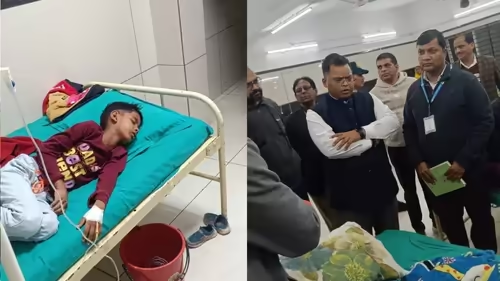
In a chilling echo of a recent, larger water crisis in Indore, a new health scare has emerged in the Mhow area. At least 22 residents, primarily vulnerable children, have fallen ill with jaundice, and the prime suspect is the very thing they need to survive: their drinking water .
This isn’t just a case of a few upset stomachs. Jaundice is a serious condition that signals liver distress, and its sudden appearance in a cluster like this points directly to a common source of contamination. For families in Mhow, trust in their taps has been shattered overnight.
Table of Contents
- The Mhow Jaundice Outbreak: What’s Happening?
- Why Contaminated Water is a Direct Path to Jaundice
- Official Response: Damage Control and Action
- What to Watch For: Jaundice Symptoms
- Conclusion: A Recurring Nightmare for Indore Residents
- Sources
The Mhow Jaundice Outbreak: What’s Happening?
The trouble began with complaints from Mhow residents late on a Thursday night, reporting a wave of illness sweeping through their community . By the time authorities arrived, over two dozen people had already been diagnosed with jaundice, a condition often linked to hepatitis A or E viruses, which are notorious for spreading through fecal-oral routes—in other words, contaminated water .
The demographic most affected—young children—underscores the severity of the situation. Their developing immune systems are less equipped to fight off such infections, making them the canaries in the coal mine for public health failures . This incident comes on the heels of a much larger and more deadly diarrhoea outbreak in another part of Indore just weeks prior, raising serious questions about the overall safety and management of the city’s water supply infrastructure .
Why Contaminated Water is a Direct Path to Jaundice
It’s crucial to understand the direct link between what’s in your glass and liver health. When water sources are compromised by sewage or other biological waste, they become breeding grounds for pathogens like the hepatitis virus. Consuming this contaminated water makes individuals “vulnerable to infection, leading to inflammation of the liver and resulting in jaundice” .
The presence of fecal coliform bacteria in a water supply is a major red flag and a common cause for such outbreaks . Essentially, if sewage is finding its way into the drinking water, it’s not a matter of *if* people will get sick, but *when* and *how many*.
Common Symptoms of Water-Borne Jaundice
If you or your family members are in an affected area, knowing the early warning signs is critical. According to health experts, symptoms to watch for include [[8], [16]]:
- Yellowing of the skin and eyes (the classic sign of jaundice)
- Dark urine (often described as tea-colored)
- Pale or clay-colored stools
- Intense itching all over the body
- Fatigue and general malaise
- Stomach pain and discomfort
These symptoms occur because the liver, overwhelmed by the infection, fails to properly process bilirubin—a waste product from the breakdown of red blood cells—causing it to build up in the bloodstream and tissues .
Official Response: Damage Control and Action
In response to the crisis, District Collector Shivam Verma has taken direct charge. He visited local hospitals to meet with patients and their families, demonstrating a hands-on approach to the emergency . His immediate directives were clear and urgent:
- Immediate water quality testing of the supply in the affected Mhow neighborhoods.
- Deployment of health teams for door-to-door surveys to identify and treat all potential cases, ensuring no one is left behind .
- Sanitation improvements to prevent any further spread of the disease .
While officials report that there are no critical cases at this time, the proactive measures are essential to contain what could easily become a much larger public health disaster. The shadow of the previous Indore water crisis, which resulted in multiple deaths, has put immense pressure on local authorities to act swiftly and transparently .
What to Watch For: Jaundice Symptoms
Beyond the official response, community awareness is the first line of defense. If you live in or near the Mhow area of Indore and experience any of the symptoms listed above, it is imperative to seek medical attention immediately. Early diagnosis and treatment can prevent complications and help public health officials track the scope of the outbreak. For more information on liver health and related conditions, you can refer to trusted resources like the World Health Organization’s page on Hepatitis.
Conclusion: A Recurring Nightmare for Indore Residents
The jaundice outbreak in Mhow is more than just a medical event; it’s a stark reminder of the fragility of public infrastructure. The fact that this is happening so soon after a deadly diarrhoea outbreak caused by contaminated water in another part of Indore suggests a systemic issue that needs a systemic solution . For now, the focus is on containment and care, but the long-term conversation must be about accountability, investment, and ensuring that clean, safe drinking water is a guaranteed right, not a luxury, for every resident. Stay vigilant, stay informed, and prioritize your health.
Sources
- Times of India: Two dozen fall ill after drinking contaminated water in Mhow
- Web Search Results: Various reports on the Indore and Mhow water crises [[1], [2], [4], [5], [10], [11], [15], [18], [19], [26], [27]]
- World Health Organization: Hepatitis Information