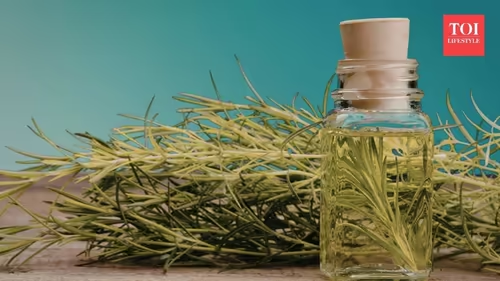
If your social media feed is anything like mine, you’ve probably seen countless videos of people swearing by rosemary oil for hair regrowth. From DIY scalp massages to adding a few drops to their shampoo, the internet is convinced this fragrant herb is the secret to a fuller head of hair. But is it a miracle cure, or just another wellness fad?
The truth, as it often is, lies somewhere in the middle. While traditional medicine has long touted rosemary’s benefits, modern science is only now beginning to catch up. Let’s cut through the noise and explore what the research actually tells us.
Table of Contents
- What Does the Science Say About Rosemary Oil?
- Rosemary Oil vs. Minoxidil: The Gold Standard
- How to Use Rosemary Oil for Hair Loss Safely
- Managing Your Expectations
- Conclusion: Is Rosemary Oil Worth a Try?
- Sources
What Does the Science Say About Rosemary Oil?
The scientific backing for rosemary oil isn’t as robust as its online popularity might suggest, but it’s far from non-existent. The most compelling piece of evidence comes from a well-known 2015 clinical study that directly compared rosemary oil to a common hair loss treatment.
This research provides a crucial starting point for anyone considering this natural remedy. It suggests that while not a guaranteed solution, rosemary oil may have genuine biological effects that support hair health.
Rosemary Oil vs. Minoxidil: The Gold Standard
Minoxidil (the active ingredient in Rogaine) is one of the few FDA-approved treatments for androgenetic alopecia, or pattern hair loss. So, how does our herbal hero stack up?
The landmark 2015 study published in the journal Skinmed is the key reference here. It found that after six months of treatment, a topical rosemary oil solution was as effective as 2% minoxidil in promoting hair growth in people with pattern hair loss . Even more intriguing, the participants using rosemary oil reported significantly fewer side effects, like scalp itching, which is a common complaint with minoxidil .
However, it’s important to note the scale of this research. It was a single study with a relatively small sample size. Other reviews of the literature conclude that while promising, the overall body of evidence for rosemary oil is still limited and more large-scale, long-term trials are needed to confirm its efficacy .
How It Might Work
Scientists believe rosemary oil’s potential benefits stem from a few key properties:
- Anti-inflammatory effects: Scalp inflammation can contribute to hair follicle damage. Rosemary oil may help soothe this irritation.
- Improved circulation: Massaging any oil into the scalp can boost blood flow, potentially delivering more nutrients to the hair follicles.
- DHT-blocking potential: Dihydrotestosterone (DHT) is a hormone that shrinks hair follicles in genetically predisposed individuals. Some preliminary research suggests rosemary oil might help inhibit DHT’s effects on the scalp .
How to Use Rosemary Oil for Hair Loss Safely
Rosemary oil is a potent essential oil and should never be applied directly to the skin in its pure form. Doing so can cause severe irritation, redness, and even chemical burns. Safety first!
Here’s the right way to use it:
- Always Dilute: Mix rosemary essential oil with a carrier oil like jojoba, coconut, or argan oil. A safe concentration is generally a 2% dilution, which translates to about 12 drops of rosemary oil per ounce (30 ml) of carrier oil .
- Perform a Patch Test: Before applying it to your entire scalp, test the diluted mixture on a small area of your inner arm. Wait 24 hours to check for any adverse reaction.
- Application: Gently massage the diluted oil into your scalp for 5-10 minutes. You can leave it on for at least 30 minutes or even overnight before washing it out with a gentle shampoo .
- Consistency is Key: Like most hair loss treatments, results won’t be immediate. Most studies showing benefits involved consistent use over several months. Experts suggest starting with 1-2 applications per week and increasing to daily use if your scalp tolerates it well .
Managing Your Expectations
It’s crucial to understand that rosemary oil for hair regrowth is not a magic bullet. Its effectiveness can vary wildly depending on the underlying cause of your hair loss. It may show some promise for androgenetic alopecia, but it’s unlikely to help with conditions like alopecia areata (an autoimmune disorder) or hair loss caused by nutritional deficiencies or major stress events (telogen effluvium).
If you’re experiencing sudden, patchy, or severe hair loss, the best course of action is to consult a dermatologist or healthcare professional. They can diagnose the root cause and recommend a treatment plan backed by solid science. For more on understanding different types of hair loss, see our guide on [INTERNAL_LINK:types-of-hair-loss].
Conclusion: Is Rosemary Oil Worth a Try?
Based on the current evidence, rosemary oil appears to be a safe and potentially effective natural option for those dealing with common pattern hair loss. While the research isn’t as extensive as we’d like, the existing data—particularly its comparable performance to minoxidil with fewer side effects—is encouraging.
If you decide to give it a go, do so with realistic expectations and always prioritize safety by diluting it properly. Think of it as a complementary part of a healthy hair care routine, not a standalone cure. At the very least, you’ll enjoy a lovely scent and a relaxing scalp massage!
Sources
- Times of India. “Can rosemary oil help regrow lost hairs? What science says.” Accessed January 2026.
- Panahi, Y., et al. “Rosemary oil vs minoxidil 2% for the treatment of androgenetic alopecia: A randomized comparative trial.” Skinmed, 2015.
- Healthline. “Rosemary Oil vs. Minoxidil: Which Is Better for Hair Loss?” July 25, 2024.
- Byrdie. “How to Properly Use Rosemary Oil for Hair Growth?” Accessed January 2026.
- Medical News Today. “How to Prepare Rosemary Oil for Hair Growth.” September 6, 2025.
- Allure. “Is Rosemary Oil the Secret to Fuller, Longer Hair? Experts Weigh In.” June 27, 2025.