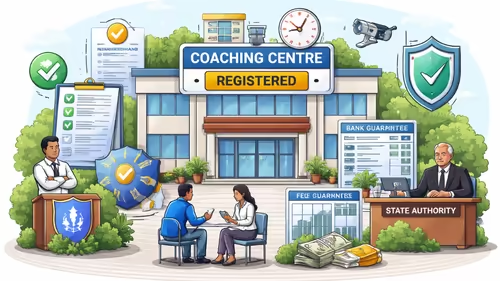
In a move that’s sent ripples through the corridors of countless coaching centres and the homes of anxious parents, Jharkhand has officially put its foot down. The Jharkhand Coaching Centres (Control and Regulation) Bill, 2025 has received the Governor’s assent, marking the dawn of a new, heavily regulated era for the state’s booming private tuition industry .
If you’re a parent investing your hard-earned money into your child’s future, or a student spending long hours in a coaching institute, this isn’t just another piece of legislation. It’s a potential game-changer designed to inject transparency, safety, and accountability into a sector that has long operated in a grey area. Let’s break down exactly what this Jharkhand coaching centre law entails and why it matters to you.
Table of Contents
- Why This Law Was Needed
- Key Provisions of the Jharkhand Coaching Centre Law
- Impact on Students and Parents
- What It Means for Coaching Institutes
- The Road Ahead
- Sources
Why This Law Was Needed
The unregulated growth of coaching centres across India, and particularly in states like Jharkhand, has been a double-edged sword. On one hand, they fill a critical gap in academic support. On the other, the lack of oversight has led to widespread issues: exorbitant and non-transparent fee structures, false promises of guaranteed results, substandard infrastructure, and, most alarmingly, serious concerns about student safety and well-being .
This new law is a direct response to these systemic failures. Its core mission is clear: to protect student interests and ensure their safety in an environment where they spend a significant portion of their formative years .
Key Provisions of the Jharkhand Coaching Centre Law
The legislation establishes a comprehensive framework for the registration, control, and regulation of coaching centres operating in the state . Here are the most critical changes it brings:
Mandatory Registration & Licensing
All coaching centres enrolling more than 50 students must register through a dedicated government web portal within six months of the Act coming into force [[26], [28]]. This isn’t just a simple sign-up; it involves obtaining campus-wise licenses, creating a formal structure for oversight.
Operational Guardrails
To prevent student burnout and ensure a healthy balance, the law strictly caps operating hours. Coaching centres can now only function between 6 am and 9 pm . They are also mandated to provide basic, gender-specific facilities, a fundamental step towards a safer environment .
Transparency in Fees and Advertising
Gone are the days of hidden charges and misleading marketing. The law requires complete fee disclosure upfront and enforces a clear refund policy. More importantly, it directly targets the rampant practice of making false or exaggerated claims in advertisements, holding institutes accountable for their promises .
Focus on Student Well-being
In a forward-thinking move, the bill mandates that every registered coaching centre must have a qualified mental health counsellor on board . This acknowledges the immense pressure students face and provides them with a crucial support system. Additionally, both students and tutors will be issued official IDs for better security and record-keeping .
Enforcement Mechanism
The law doesn’t just set rules; it creates the machinery to enforce them. It establishes a State-level authority and District-level committees to oversee compliance . To ensure financial accountability, institutes will be required to submit a bank guarantee, which can be used to settle disputes or refund fees if the centre shuts down abruptly . Violations will be met with graded penalties, ranging from fines to the ultimate cancellation of their license .
Impact on Students and Parents
For families, this law is a significant win. Parents can now expect a much higher degree of transparency before committing to a coaching centre. They’ll have clear information on fees, a legal right to a refund under defined circumstances, and the peace of mind that comes from knowing their child is in a licensed facility with safety protocols and access to mental health support. This shifts the power dynamic, giving consumers—the students and their families—more control and protection.
What It Means for Coaching Institutes
For the coaching industry, this marks a period of major adjustment. Smaller, unorganized players who cannot meet the new standards—such as providing a counsellor, securing a bank guarantee, or adhering to the operational hours—may find it difficult to survive. However, for larger, established, and ethical institutes, this law could be a blessing in disguise. By weeding out fly-by-night operators, it levels the playing field and builds greater trust in the entire sector. Compliance will be key, and institutes will need to invest in their infrastructure and administrative processes to stay in business .
The Road Ahead
The success of the Jharkhand coaching centre law hinges entirely on its implementation. Setting up the state authority and district committees is just the first step. Their effectiveness in monitoring thousands of centres, handling grievances swiftly, and enforcing penalties without bias will determine whether this landmark legislation truly delivers on its promise of a safer, fairer, and more transparent coaching ecosystem in Jharkhand. For now, it stands as a bold and necessary intervention in a critical part of the state’s education journey.