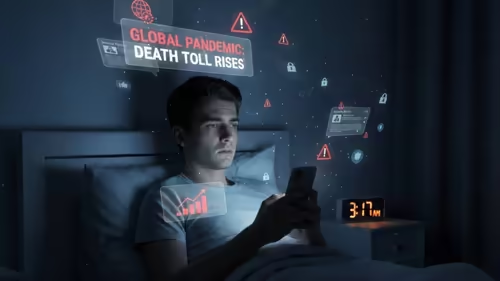
You’re lying in bed, phone in hand, telling yourself you’ll check just one more headline. Two hours later, you’re deep in a rabbit hole of climate disasters, political chaos, and global crises—heart racing, mind buzzing, sleep long gone. Sound familiar?
For years, we’ve been told this habit—known as doomscrolling—is a sign of poor discipline or even screen addiction. But new psychological research flips that script entirely. Doomscrolling isn’t about laziness or lack of control. It’s your ancient survival brain misfiring in a 24/7 news cycle. And once you understand that, you can finally stop blaming yourself—and start healing.
Table of Contents
- What Is Doomscrolling—Really?
- Why Your Brain Can’t Look Away
- The Hidden Costs of Late-Night Scrolling
- How to Stop Doomscrolling Without Guilt
- Building a Healthier Digital Routine
- Conclusion: Reclaim Your Peace, One Swipe at a Time
- Sources
What Is Doomscrolling—Really?
Doomscrolling refers to the compulsive act of endlessly consuming negative, distressing, or catastrophic news online—often late at night—even when it makes you feel worse. Unlike casual browsing, doomscrolling is driven by a sense of urgency: “I need to know what’s happening.”
But here’s the key insight: this behavior isn’t rooted in addiction to screens. It’s a stress response. As psychologists explain, our brains are wired to scan for threats—a trait that kept our ancestors alive on the savanna. In today’s world, however, the “threat” is an infinite stream of global crises, and our nervous system never gets the “all clear” signal .
Why Your Brain Can’t Look Away
Neuroscience offers a clear explanation. The amygdala—the brain’s alarm center—activates when we encounter danger. Negative news triggers this same circuitry, flooding the body with cortisol and adrenaline. This creates a feedback loop:
- You see a scary headline → your brain perceives threat.
- Your body goes into high alert (increased heart rate, tension).
- You keep scrolling, hoping for resolution or reassurance.
- But the news never ends—so the alert never shuts off.
Over time, this cycle rewires your attention toward negativity, making it harder to disengage. It’s not that you “can’t stop”—it’s that your biology is screaming, “This matters! Pay attention!”
The Hidden Costs of Late-Night Scrolling
Beyond the immediate anxiety, chronic doomscrolling has serious ripple effects:
- Sleep disruption: Blue light suppresses melatonin, while emotional arousal delays sleep onset.
- Increased anxiety & depression: Constant exposure to distressing content amplifies feelings of helplessness.
- Reduced focus: A hyper-vigilant brain struggles with deep work or presence in daily life.
- Physical symptoms: Headaches, eye strain, and even digestive issues from prolonged stress activation.
According to the American Psychological Association, prolonged exposure to negative media can mimic symptoms of post-traumatic stress—even in people not directly affected by the events .
How to Stop Doomscrolling Without Guilt
The first step? Drop the shame. You’re not weak—you’re human. Now, try these evidence-based strategies:
- Set a “news curfew”: Stop consuming news 90 minutes before bed. Use app timers or grayscale mode to reduce visual appeal.
- Replace the ritual: Swap scrolling with a calming alternative—reading fiction, journaling, or a short meditation.
- Curate your feed: Unfollow accounts that trigger anxiety. Follow sources that offer solutions, not just problems.
- Ask one question: Before opening an app, ask: “Will this help me act, or just make me feel worse?”
For more on mindful tech use, explore our guide on [INTERNAL_LINK:digital-detox-strategies].
Building a Healthier Digital Routine
Long-term change comes from designing your environment—not relying on willpower. Consider these sustainable habits:
- Charge your phone outside the bedroom.
- Use “Do Not Disturb” modes during wind-down hours.
- Subscribe to a weekly news digest instead of real-time alerts.
- Practice “information fasting” one day a week—no news, no social media.
Remember: staying informed doesn’t require constant immersion. As journalist Cal Newport notes, “You can be aware of the world without letting it hijack your nervous system” .
Conclusion: Reclaim Your Peace, One Swipe at a Time
Doomscrolling is not a character flaw—it’s a natural reaction to an unnatural information overload. By reframing it as a stress response rather than a moral failing, you free yourself to respond with compassion, not criticism. Small, consistent boundaries around your digital consumption can restore sleep, reduce anxiety, and reconnect you with what truly matters: your present life, not the endless scroll of worst-case scenarios.
Sources
- Times of India: You’re ‘not addicted’ to screen: What is Doomscrolling and why it feels impossible to stop?
- American Psychological Association: Stress and Media Consumption
- Newport, C. (2023). Digital Minimalism. Portfolio.