Introduction
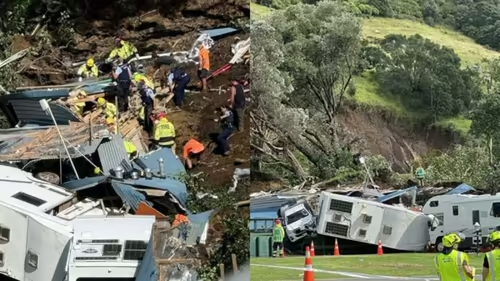
In the early hours of a quiet January morning, nature unleashed its fury on a serene campsite in New Zealand’s South Island. What should have been a peaceful retreat for travelers turned into a scene of utter devastation when a massive New Zealand campsite landslide tore through the area, burying tents, crushing campervans, and leaving dozens unaccounted for .
Emergency responders describe the site as resembling a “war zone”—a chilling testament to the scale of destruction. As of Thursday, January 22, 2026, no survivors have been pulled from the rubble, and the search continues under perilous conditions that threaten both victims and rescuers alike.
Table of Contents
- What Happened: The Landslide Event
- New Zealand Campsite Landslide: Location and Victims
- Rescue Efforts Hampered by Dangerous Conditions
- Why This Area Is Prone to Landslides
- Global Lessons in Campsite Safety
- How to Help and Stay Informed
- Conclusion: A Race Against Time
- Sources
What Happened: The Landslide Event
According to local authorities, the landslide occurred after days of heavy rainfall saturated the hillsides near the campsite—a known risk factor in mountainous regions . In a matter of minutes, thousands of tons of earth, rock, and debris cascaded down the slope, obliterating everything in its path.
Eyewitnesses reported hearing a “roaring sound like thunder” before the ground gave way. Campers had little to no time to react. Tents were flattened, and lightweight campervans were tossed like toys. The sheer speed and volume of the slide left no room for escape.
New Zealand Campsite Landslide: Location and Victims
While the exact location has not been officially disclosed for operational security, reports indicate the campsite is in a remote but popular tourist corridor on the South Island—likely near Fiordland or the West Coast, areas famed for their rugged beauty but also high geological risk .
The victims are believed to include both international tourists and local residents. Many were families or solo backpackers drawn to New Zealand’s world-renowned outdoor experiences. Authorities are cross-referencing campsite registration logs, vehicle records, and border entry data to determine the full list of missing persons—a painstaking process complicated by the site’s isolation .
Rescue Efforts Hampered by Dangerous Conditions
Search and rescue operations have been described as “extremely challenging.” Unstable ground, ongoing rainfall, and the risk of secondary landslides have forced teams to proceed with extreme caution.
- Helicopters are being used to airlift specialized personnel and equipment.
- Search dogs and thermal drones are scanning the debris field for signs of life.
- Heavy machinery is on standby but cannot be deployed until geotechnical experts confirm the slope is stable.
New Zealand’s Minister of Civil Defence called the scene “unlike anything we’ve seen in recent memory,” adding that “every hour counts, but safety must come first” .
Why This Area Is Prone to Landslides
New Zealand sits on the Pacific Ring of Fire, a geologically active zone where tectonic plates collide. This makes the country highly susceptible to earthquakes, volcanic activity—and landslides.
Key risk factors include:
- Steep terrain: Especially in the Southern Alps and coastal ranges.
- High rainfall: Some regions receive over 6,000 mm of rain annually.
- Loose glacial soils: Left behind by ancient ice sheets, these materials erode easily.
The national geological hazard monitoring agency, GNS Science, maintains a public landslide risk map—but many campsites operate in zones classified as “moderate to high risk” .
Global Lessons in Campsite Safety
This tragedy underscores a global issue: the romanticization of “wilderness camping” without adequate risk assessment. Travelers often assume natural beauty equals safety—a dangerous misconception.
Experts recommend:
- Checking official hazard maps before booking remote campsites.
- Avoiding valleys, gullies, and steep slopes during or after heavy rain.
- Registering travel plans with local authorities or embassies.
For more on responsible adventure travel, see our guide: [INTERNAL_LINK:adventure-travel-safety-tips].
How to Help and Stay Informed
If you’re concerned about someone who may have been at the site, contact the New Zealand Police non-emergency line or your country’s embassy in Wellington.
Donations to support rescue logistics and victim families can be made through verified channels like the New Zealand Red Cross .
Follow official updates via:
- New Zealand Civil Defence: civildefence.govt.nz
- GNS Science Hazards Portal: gns.cri.nz
Conclusion: A Race Against Time
The New Zealand campsite landslide is more than a natural disaster—it’s a stark reminder of nature’s power and the fragility of human life in its presence. As rescue teams battle mud, rain, and fear, the world watches and waits, hoping for miracles amid the rubble. For now, the priority remains clear: find the missing, honor the lost, and ensure such a tragedy informs future safety protocols across the globe.
Sources
- Times of India: Several feared missing in landslip at New Zealand campsite
- New Zealand Government – National Emergency Management Agency: Official Updates
- GNS Science (New Zealand): Landslide Risk and Monitoring
- World Meteorological Organization: Extreme Weather and Geological Hazards Report
- New Zealand Red Cross: Disaster Relief Support