Table of Contents
- The Incident Unfolds
- Rohit Sharma Hotel Incident: What We Know
- The Human Story Behind the Plea
- Security Protocols and Celebrity Vulnerability
- Why Do People Turn to Celebrities for Help?
- Conclusion: Empathy and Systemic Change
- Sources
The Incident Unfolds
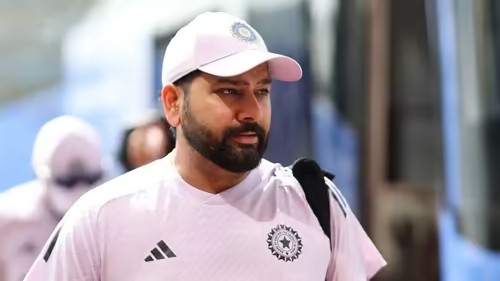
It was a routine day for Team India—until it wasn’t. Outside their team hotel, Indian cricket captain Rohit Sharma was suddenly confronted by a distraught woman who grabbed his arm, tears streaming down her face, and cried out, “Please help me!” The moment, captured on video and widely shared online, sent shockwaves through the sports and social media communities .
This wasn’t a fan seeking an autograph. It was a desperate mother pleading for assistance with her daughter’s life-saving medical treatment—a rare condition requiring an injection that costs a staggering **Rs 9 crore** (approximately $1.1 million USD). Her emotional appeal, directed at one of India’s most beloved athletes, has sparked a national conversation about healthcare access, celebrity responsibility, and the limits of public compassion.
Rohit Sharma Hotel Incident: What We Know
According to reports from the Times of India, the incident occurred as Sharma was entering or exiting the team hotel during a recent international series . The woman, whose identity hasn’t been officially disclosed, managed to bypass initial security layers and directly approached the cricketer.
She explained that she had been trying to reach out to cricketers and other public figures for weeks, hoping someone would step in to fund the exorbitant cost of the Zolgensma injection—a gene therapy used to treat spinal muscular atrophy (SMA) in infants. The drug is among the most expensive in the world, and while available in India, it remains financially out of reach for all but the wealthiest families .
Sharma, visibly taken aback but composed, reportedly listened briefly before security personnel intervened and escorted the woman away. There’s no indication he made any promises on the spot, but the emotional weight of the encounter was evident.
Official Response
As of now, neither the BCCI nor Rohit Sharma’s personal team has issued a formal statement. However, sources close to the player suggest he was deeply moved by the encounter and is exploring options through private channels—possibly in coordination with existing charitable foundations linked to Indian cricket .
The Human Story Behind the Plea
Behind the viral video is a heartbreaking reality faced by thousands of Indian families. Spinal muscular atrophy (SMA) is a genetic disorder that leads to muscle weakness and respiratory failure. Without treatment, many children don’t survive past early childhood.
Zolgensma, developed by Novartis, offers a potential cure—but at a cost that dwarfs the average Indian household income. Even with government schemes like Ayushman Bharat, which covers up to Rs 5 lakh per family annually, such ultra-expensive therapies remain inaccessible .
This gap forces families into impossible choices: mortgage homes, sell assets, or—increasingly—turn to social media and public figures in a last-ditch effort to save their child. The woman’s approach to Rohit Sharma wasn’t random; it was born of exhaustion and desperation after exhausting all conventional avenues.
Security Protocols and Celebrity Vulnerability
The incident also raises serious questions about athlete security. While Indian cricketers enjoy high-profile protection, this breach shows vulnerabilities remain—especially in semi-public spaces like hotel lobbies or entrances.
However, it’s worth noting that overly rigid security can alienate fans and create a fortress-like atmosphere. Striking the right balance between safety and accessibility is a constant challenge for sports teams and event organizers.
Why Do People Turn to Celebrities for Help?
Celebrities like Rohit Sharma are seen as modern-day benefactors. Their massive platforms, wealth, and perceived influence make them natural targets for public appeals. Consider these factors:
- Visibility: A single tweet from a star can raise millions overnight (e.g., campaigns by Virat Kohli or Priyanka Chopra).
- Trust: Athletes like Sharma are viewed as humble, grounded, and connected to grassroots India.
- Systemic Failure: When public health systems fall short, people look to individuals they believe can “cut through the red tape.”
Yet this places an unfair burden on celebrities. No single person—no matter how wealthy—can solve systemic healthcare gaps. As one health policy expert noted, “Turning to stars for medical aid is a symptom of a broken system, not a sustainable solution” .
Conclusion: Empathy and Systemic Change
The Rohit Sharma hotel incident is more than a security scare—it’s a mirror reflecting deep societal challenges. While Sharma’s personal response remains private, the episode should ignite broader dialogue about making life-saving treatments affordable and accessible in India. Celebrities can amplify causes, but real change requires policy reform, insurance innovation, and pharmaceutical pricing negotiations. Until then, desperate pleas like this one will keep finding their way to hotel doors—and our hearts.
For more on healthcare access in India, see our feature on [INTERNAL_LINK:india-healthcare-crisis-solutions].
Sources
- Times of India: Woman grabs Rohit Sharma at team hotel, cries ‘please help me’
- World Health Organization (WHO): Universal Health Coverage
- Novartis India: Zolgensma for Spinal Muscular Atrophy
- Ministry of Health and Family Welfare, India: Ayushman Bharat Pradhan Mantri Jan Arogya Yojana