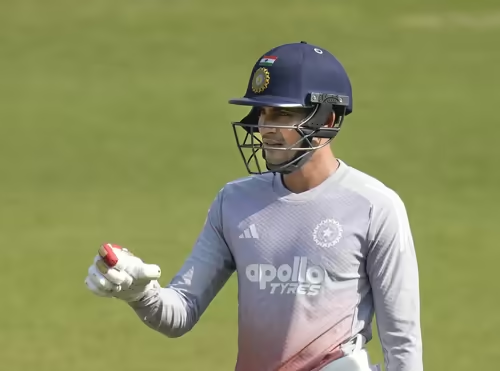
Shubman Gill’s Master Plan for Indian Cricket
In a move that has sent ripples through the Indian cricketing ecosystem, Shubman Gill is championing a cause that could redefine player development and national team success. The young batting stalwart isn’t just focused on his own game; he’s looking at the bigger picture, demanding that India’s established Test match stars return to the gritty battleground of the Ranji Trophy. This isn’t just about domestic cricket—it’s a calculated strategy with two monumental goals: conquering the red-ball challenge in Sri Lanka later this year and crafting an unbeatable unit for the 2027 ODI World Cup.
Table of Contents
- Why Shubman Gill Wants Test Regulars in Ranji Trophy
- The Sri Lanka Test Tour: A Red-Ball Reality Check
- Building the 2027 ODI World Cup Winning Machine
- BCCI Policy: What’s Already in Motion?
- Conclusion: Gill’s Vision for Indian Cricket
- Sources
Why Shubman Gill Wants Test Regulars in Ranji Trophy
The argument is simple yet powerful. In an era where international calendars are packed with white-ball cricket, the traditional pathway to red-ball proficiency—the multi-day domestic grind—is often bypassed by top players. Shubman Gill believes this is a critical flaw. By playing in the Ranji Trophy, even for a few matches, Test regulars can maintain their skills against the moving ball, build long innings under pressure, and develop the mental fortitude required for the longest format. It’s not just about practice nets; it’s about real-match intensity in familiar conditions.
This call for action aligns with a growing sentiment within the BCCI. Recent reports indicate a push to make domestic participation mandatory for centrally contracted players, with potential consequences like IPL ineligibility for non-compliance . Gill’s stance adds significant weight to this policy, coming from a current national team leader who himself is returning to the Ranji fold for Punjab’s crucial match against Saurashtra .
The Sri Lanka Test Tour: A Red-Ball Reality Check
The immediate catalyst for Gill’s demand is India’s upcoming two-match Test series in Sri Lanka, scheduled for August 2026 . Fresh off a disappointing 2-0 defeat to South Africa, the Indian team needs to rebuild its Test identity, especially on turning tracks. Sri Lanka’s pitches, known for their assistance to spin, will be a stern test for the Indian batting lineup.
Gill’s logic is that there’s no better preparation than facing high-quality domestic spinners in the Ranji Trophy. The competition offers a variety of conditions and bowling attacks that can simulate the challenges of subcontinental tours far better than internal practice games. For players returning from injury or a long white-ball break, this is invaluable match practice to shake off the rust and find their rhythm before stepping onto the international stage.
Building the 2027 ODI World Cup Winning Machine
While the Ranji Trophy focus is on red-ball readiness, Shubman Gill is simultaneously laying the groundwork for India’s campaign at the 2027 ODI World Cup. His vision for the 50-over format is clear and addresses two key areas identified as weaknesses in recent campaigns: middle-overs penetration and a reliable fast-bowling core .
A New Middle-Overs Strategy
Gone are the days when the middle overs were a period of consolidation. In modern ODI cricket, they are a battleground for dominance. Gill’s plan likely involves building a versatile middle order capable of both rotating the strike and finding boundaries against tight bowling. This requires players with exceptional game awareness and skill against spin—a quality that can also be honed in the longer format of the Ranji Trophy.
Forging a Fast-Bowling Core
India’s pace attack has been a strength, but maintaining a consistent, world-class unit is a constant challenge. Gill’s management is focused on developing a deep bench of fast bowlers who can execute plans in the powerplay and, crucially, deliver yorkers and slower balls with precision in the death overs. The structured ODI calendar planned through 2027 provides the perfect platform to test and solidify this core .
BCCI Policy: What’s Already in Motion?
Gill’s advocacy isn’t happening in a vacuum. The BCCI has already signaled a major shift in its philosophy towards domestic cricket. Following setbacks in Australia, the board introduced measures that include “mandatory participation in domestic cricket” for national squad members . While it may not be a strict rule for every single player yet, the message is clear: commitment to the domestic structure is now a non-negotiable part of being an Indian cricketer .
This policy creates a virtuous cycle. Stronger domestic competition, fueled by the presence of international stars, raises the overall standard of Indian cricket. This, in turn, creates a deeper talent pool for selectors to choose from for both Test and ODI squads, ensuring long-term success beyond any single tournament.
Conclusion: Gill’s Vision for Indian Cricket
Shubman Gill is emerging not just as a prolific run-scorer but as a forward-thinking leader with a holistic vision for Indian cricket. His dual-pronged strategy—leveraging the Ranji Trophy for red-ball excellence and meticulously planning for the 2027 ODI World Cup—shows a maturity beyond his years. By insisting that Test regulars embrace the domestic grind, he is investing in the future resilience of the Indian team across all formats. This approach, backed by a proactive BCCI, could be the foundation for a new era of sustained dominance for Indian cricket on the global stage. For fans, this means a team that is not only talented but also deeply prepared and strategically sound. Keep an eye on [INTERNAL_LINK:india-cricket-team-news] for more updates on this evolving strategy.
Sources
- Times of India: Shubman Gill wants Test regulars to play Ranji Trophy; firms up ODI WC plans – exclusive
- ESPNcricinfo: India’s WTC series in Sri Lanka slated for August 2026
- Hindustan Times: BCCI mandates domestic cricket participation for national players
- Wisden India: India’s urgent ODI overhaul for 2027 World Cup