Introduction: A Monument to Memory or a Political Gesture?
Forty years have passed since the night the sky over Bhopal turned deadly. On December 3, 1984, a toxic cloud of methyl isocyanate gas escaped from the Union Carbide India Limited (UCIL) plant, claiming thousands of lives instantly and leaving a legacy of suffering that continues to this day. Now, in a move that has sparked both hope and skepticism, the Madhya Pradesh government has announced a monumental project: a Bhopal Gas Tragedy Memorial on the very grounds of the disaster, modeled after the poignant peace memorials in Hiroshima and Nagasaki.
The proposed cost? A staggering Rs 1,200 crore . This isn’t just a statue or a plaque; it’s a comprehensive vision that includes not only a memorial complex but also the final cleanup of the site and a scientific study of its lingering contamination. But can a physical structure ever truly encapsulate the scale of the tragedy, or is this a long-overdue step towards national healing and accountability?
Table of Contents
- The Hiroshima-Nagasaki Blueprint: What Can Bhopal Learn?
- The Union Carbide Site: A Toxic Legacy
- The Rs 1,200 Crore Plan: Breaking Down the Costs
- Beyond the Memorial: The Scientific Study and Environmental Concerns
- Conclusion: A Memorial for Justice, or Just a Monument?
- Sources
The Hiroshima-Nagasaki Blueprint: What Can Bhopal Learn?
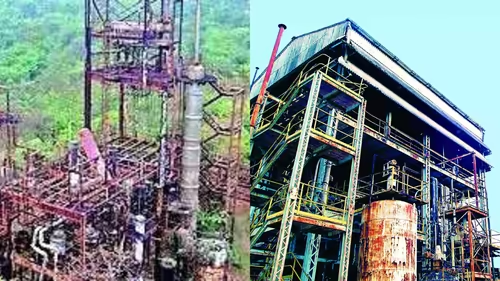
Drawing a parallel between the atomic bombings and an industrial disaster is a powerful, albeit controversial, statement. The Hiroshima Peace Memorial Park, designed by architect Kenzo Tange, is not just a place of mourning; it’s a living, breathing call for peace and a stark warning against the horrors of war . Its central feature, the Genbaku Dome, stands as a preserved ruin—a hauntingly authentic artifact of the event, much like the factory complex in Bhopal is seen as a powerful physical reminder of the tragedy .
A successful Bhopal Gas Tragedy Memorial would need to capture this same duality: a space for quiet reflection and a potent educational tool. It could feature pathways lined with memorial stones, interactive exhibits detailing the events of that fateful night, and spaces dedicated to the ongoing health struggles of survivors. The goal should be to create an experience that is not just visually striking but emotionally resonant and intellectually honest, ensuring the world never forgets the human cost of corporate negligence.
The Union Carbide Site: A Toxic Legacy
For decades, the abandoned UCIL factory has been a grim symbol of a broken promise. The plant ceased operations immediately after the disaster and was eventually sold, but hundreds of tonnes of toxic waste remained on the premises, leaching into the soil and groundwater, poisoning the surrounding communities for generations .
However, a significant milestone was reached in early January 2025, when the last of the 348 metric tonnes of toxic waste was finally removed from the site and transported to a secure facility in Pithampur for incineration . This cleanup, a long-standing demand of activists and survivors, is a crucial prerequisite for any memorial project. Without it, the site itself would remain a source of danger, undermining the very purpose of a place meant for remembrance and peace.
The Rs 1,200 Crore Plan: Breaking Down the Costs
The figure of Rs 1,200 crore is immense, especially when compared to previous, more modest proposals that were estimated at around Rs 180 crore . This massive investment suggests a far more ambitious scope than just landscaping and a few monuments. The plan appears to be a three-pronged strategy:
- The Memorial Complex: This will be the heart of the project, encompassing the design, construction, and landscaping of the memorial park, likely inspired by the thoughtful architecture of Hiroshima.
- Environmental Remediation & Scientific Study: A significant portion of the funds will be allocated to a comprehensive scientific study to evaluate the existing contamination levels post-cleanup and to ensure the long-term environmental safety of the area .
- Site Development & Infrastructure: Transforming an industrial wasteland into a public park requires substantial investment in basic infrastructure, security, and visitor facilities.
While the scale is impressive, transparency in how these funds are spent will be paramount to maintaining public trust.
Beyond the Memorial: The Scientific Study and Environmental Concerns
The announcement of a scientific study is perhaps the most critical and welcome aspect of this plan. For years, survivors and activists have demanded independent, rigorous assessments of the site’s contamination. Even after the recent waste removal, concerns linger about residual toxins in the soil and water table .
This study must be conducted by a credible, independent international body to ensure its findings are beyond reproach. Its results should be made public and used to guide not only the memorial’s development but also any future health and environmental monitoring programs for the affected communities. The memorial’s success will be measured not just by its beauty, but by its commitment to truth and ongoing environmental stewardship. This is a key opportunity to link the past tragedy with a future-focused [INTERNAL_LINK:environmental-justice-in-india] initiative.
Conclusion: A Memorial for Justice, or Just a Monument?
The proposed Bhopal Gas Tragedy Memorial is a landmark decision that carries immense symbolic weight. By choosing to build on the very site of the disaster and drawing inspiration from Hiroshima, the MP government is acknowledging the global significance of the event. The commitment to a final cleanup and a scientific study addresses long-standing, critical demands.
However, the true test of this Rs 1,200 crore project will be in its execution. Will it be a hollow monument built for political optics, or will it be a living, evolving space that honors the victims, educates the public, and actively contributes to the pursuit of justice and environmental health? The answer to this question will determine whether this memorial becomes a beacon of hope or just another expensive footnote in the long, painful history of the Bhopal disaster.
Sources
- Times of India: Bhopal gas tragedy: MP govt plans Hiroshima & Nagasaki style memorial
- Hiroshima Peace Memorial Park Official Information: Hiroshima Peace Memorial Museum
- UN Environment Programme on Industrial Disasters: Responding to Emergencies: Industrial Accidents