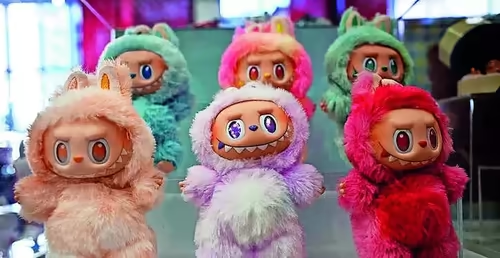
What’s Really Inside Your Labubu Doll? The Human Cost of a Global Craze
They’re cute, they’re collectible, and they’re everywhere. But behind the mischievous grin of the wildly popular Labubu doll lies a story of alleged human suffering that’s casting a long shadow over its parent company, Pop Mart. A new, explosive report from the non-profit watchdog China Labor Watch (CLW) has pulled back the curtain on what it describes as a system of severe worker exploitation at a key manufacturing facility in China .
This isn’t just about a toy; it’s about the hidden human cost of fast fashion and viral consumerism. If you’ve ever bought or coveted a Labubu, this is a story you need to know.
Table of Contents
- The ‘Labubu, Unboxed’ Report: Key Findings
- Shunjia Toys: The Factory Behind the Fun
- Allegations of Underage Workers and Blank Contracts
- The Overtime Crisis: Exceeding Legal Limits
- Pop Mart’s Response and the Road Ahead
The ‘Labubu, Unboxed’ Report: Key Findings
Published on January 13, 2026, CLW’s report, titled ‘Labubu, Unboxed: the labor behind the global toy‘, is the result of a three-month undercover investigation at the Shunjia Toys factory in Xinfeng County, Jiangxi Province . This facility is a core supplier for Pop Mart, the Hong Kong-based giant behind the Labubu IP .
The findings paint a grim picture of the working conditions for the employees who bring these beloved figures to life. The report alleges a series of systemic violations that go against both Chinese labor law and basic human rights principles.
Shunjia Toys: The Factory Behind the Fun
Shunjia Toys Co. Ltd. is not some obscure, fly-by-night operation. It’s a major player in Pop Mart’s supply chain, responsible for producing a significant portion of the Labubu dolls that flood markets across Asia, Europe, and North America . The fact that such serious allegations are levied against a primary vendor of a publicly traded, multi-billion dollar company like Pop Mart makes this case particularly significant for investors and consumers alike .
Labubu factory exploitation: Underage Workers and Blank Contracts
Among the most disturbing claims in the CLW report are the allegations of child labor. Investigators claim the factory hired underage workers without providing them with the special legal protections mandated for minors in the workplace . This is a grave violation that strikes at the heart of ethical manufacturing.
Furthermore, workers were allegedly forced to sign blank employment contracts. This practice strips employees of their legal rights from the very start, leaving them with no documented proof of their agreed-upon wages, working hours, or benefits. It’s a tactic often used to intimidate workers and prevent them from seeking legal recourse .
The Overtime Crisis: Exceeding Legal Limits
Chinese labor law strictly limits monthly overtime to 36 hours. However, the CLW report states that workers at the Shunjia factory were routinely forced to work far beyond this cap to meet unrealistic production targets set by management .
During peak seasons, the pressure intensified, leading to grueling schedules that left workers physically and mentally exhausted. This relentless pace, driven by the global demand for Labubu, appears to have come at the direct expense of worker well-being and legal compliance.
Pop Mart’s Response and the Road Ahead
In the wake of the report, Pop Mart’s stock price fell by approximately 5%, signaling investor concern over the potential reputational and financial damage . The company has stated it is investigating the claims and is committed to ethical sourcing.
However, for many consumers and human rights advocates, a simple investigation is not enough. There are growing calls for Pop Mart to implement independent, third-party audits of its entire supply chain and to publish the results transparently. The true test will be whether the company moves beyond PR statements to enact real, systemic change.
For consumers, this raises an important question about the ethics of their purchases. Supporting brands that fail to ensure humane working conditions in their supply chains can inadvertently fuel the very exploitation exposed by reports like this one.
Conclusion: Unboxing the Truth
The ‘Labubu, Unboxed’ report serves as a stark reminder that the shiny, plastic exterior of our favorite collectibles can often mask a much uglier reality. The allegations of Labubu factory exploitation—from underage labor to illegal overtime—are not just a problem for Pop Mart; they are a challenge to the entire industry to prioritize people over profit. As the world becomes more conscious of ethical consumption, companies can no longer afford to keep their supply chains in the shadows.
Sources
- China Labor Watch: Labubu, Unboxed: the labor behind the global toy [[1], [2], [3]]
- Times of India: What’s wrong with Labubu? Workers at Chinese factory exploited; long work & low pay
- Bloomberg: POP MART Falls ~5% at Midday Amid Heavy Trading
- The Guardian: Allegations of exploitation at factory that makes Labubus [[7], [8]]
- Human Rights & Responsible Commerce (HRRC): Labubu factories linked to exploitation of underage workers